
What Is Thuja Green Giant Arborvitae?
The Thuja Green Giant stands out as a rapidly growing evergreen, prized for its ability to form dense, verdant privacy screens and effective windbreaks, deer generally steer clear of it.
Under optimal conditions, this exceptional plant can add an impressive 3 to 4 feet to its height annually, flourishing particularly well in USDA zones 5 through 8 with its naturally appealing look.
Why Is Thuja Green Giant Arborvitae Spacing Crucial?

Properly spacing your Thuja Green Giant Arborvitae is essential, as it directly impacts the trees’ health and helps you achieve your landscaping vision, whether that’s creating a private hedge, a robust windbreak, or simply enhancing your property’s beauty.
Conversely, improper spacing can lead to significant issues. For instance, trees planted too closely together:
- will become overcrowded,
- causing their roots to tangle,
- increasing their susceptibility to pests and diseases,
- often results in premature tree death.
However, providing ample space offers numerous advantages:
- it guarantees sufficient sunlight exposure and airflow,
- both critical for strong root development and overall tree vitality,
- crucial for maintaining their long-term health,
- enhancing their visual appeal.
How Does Optimal Spacing Support Tree Health?
Proper plant spacing is incredibly important, as it ensures that each plant receives ample sunlight and air circulation. This not only promotes rapid drying of foliage, which in turn significantly reduces the risk of fungal diseases, but also benefits the roots beneath the soil.
When roots have enough room to spread out, they are far less likely to become tangled, making it much easier for them to absorb essential water and nutrients. Ultimately, this approach leads to healthier, more robust plants that are better equipped to thrive and resist stress.
How Does Proper Spacing Achieve Landscape Goals?
Strategic tree placement is key to shaping your landscape. By carefully considering the distance between each planting, you can achieve various aesthetic and functional outcomes, thereby guiding their growth exactly as you envision.
For instance, a dense arrangement creates a swift, robust privacy screen. Conversely, more generous spacing forms an effective windbreak, all while permitting sunlight to filter through. This thoughtful approach ensures every Green Giant excels in its designated role, enhancing both the visual appeal and practicality of your outdoor space.
What Are Optimal Thuja Green Giant Spacing Guidelines for Different Purposes?
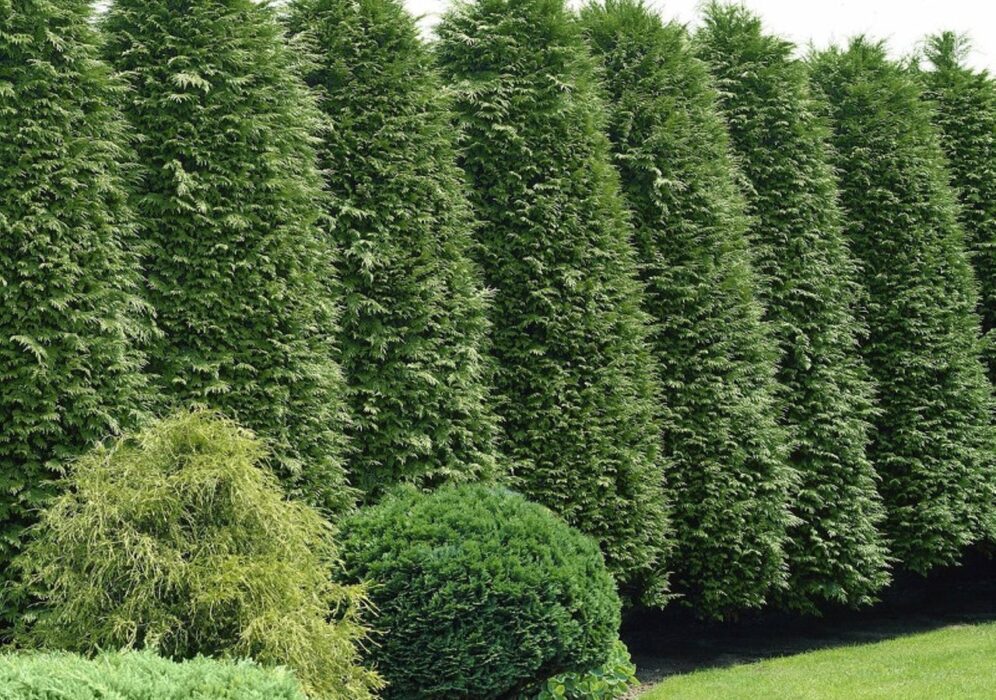
Achieving optimal spacing for Thuja Green Giants is crucial due to its direct impact on your landscaping goals. Precise placement helps you reach your desired outcome and ensures the long-term health and vitality of your trees. Adhering to proper spacing guidelines from the outset is paramount for success, differing based on your specific objective:
- if you want to create a dense privacy screen, specific spacing is absolutely essential,
- if you’re aiming for a more open, natural aesthetic, the considerations for placement will differ,
- if you want to achieve an effective windbreak, this also demands careful attention to how these trees are arranged.
What Spacing Creates a Dense Privacy Hedge?
If you’re aiming for a lush, rapidly growing privacy hedge, the Green Giant arborvitae is an excellent choice. To achieve a dense, solid privacy wall quickly, plant them about five to six feet apart, measuring from the center of one tree to the center of the next in a single row. This method will typically create an effective screen in just three to four years.
While planting them closer, say four to five feet apart, might give you faster initial coverage, a five to six-foot spacing is ultimately more beneficial. This slightly wider distance promotes superior long-term health for your hedge and naturally prevents issues of overcrowding as the trees mature.
What Spacing Creates a Staggered Double-Row Hedge?
If you’re aiming for a dense screen quickly, consider using a staggered double-row planting method.
Here’s how to do it:
- position two rows roughly four feet from each other,
- in each row, individual trees should be spaced eight to fifteen feet apart,
- strategically stagger the trees in the second row so they fill the gaps of the first, creating an alternating pattern.
This clever arrangement effectively reduces the diagonal spacing between trees across both rows to a mere five to eight feet. This approach not only significantly enhances privacy but also offers superior wind protection and results in a much fuller, more robust appearance.
What Spacing Optimizes Windbreak Effectiveness?
For an effective windbreak, consider planting Thuja Green Giant Arborvitae. Give each of these robust evergreens ample room to thrive, spacing them about 8 to 12 feet apart. This generous spacing is crucial; it ensures proper air circulation and allows sufficient sunlight to penetrate, ultimately reducing stress on individual trees while still providing excellent protection against strong winds.
What Spacing Is Best for Open Screens or Individual Trees?
To achieve an expansive, natural view with your Thuja Green Giants, plant them 8 to 10 feet apart. This same spacing is also ideal if you’re featuring a single specimen tree. However, if you truly want to highlight an individual tree, giving it ample room to flourish and branch out, position them 12 to 15 feet apart. This generous spacing allows each tree to reach its full potential, preventing overcrowding and minimizing competition for vital growth resources.
What Factors Influence Thuja Green Giant Spacing Decisions?
When planning your Thuja Green Giant Arborvitae planting, remember that proper spacing is crucial for their well-being and to achieve your desired landscape.
To ensure healthy trees and a beautiful landscape, consider the following:
- mature size of the plant, accounting for its rapid growth rate,
- adequate clearance from structures or property boundaries.
These considerations are vital whether your landscaping vision is a neat hedge or a dense screen.
How Does Mature Plant Size Dictate Spacing?
When planting Thuja Green Giant Arborvitae, consider their mature size. These trees can grow 12 to 18 feet wide, and neglecting this can lead to issues.
Planting them too close together creates a seriously crowded environment, causing several problems:
- lower branches won’t get enough sunlight,
- poor air circulation becomes a major concern, significantly increasing the risk of plant diseases spreading,
- roots will have to compete fiercely for water and essential nutrients.
This crowding severely impacts each individual tree’s health due to reduced access to vital resources. Ultimately, the entire planting will suffer, losing its aesthetic appeal and experiencing a decline in overall health.
Why Is Growth Rate Key in Spacing Decisions?
The Thuja Green Giant Arborvitae is a remarkably fast-growing tree, typically gaining three to four feet in height annually. This rapid development significantly influences optimal spacing decisions. Even when planted with seemingly ample room, these trees quickly interlace to form a dense and effective privacy screen. Understanding their vigorous growth habit is crucial for successful landscaping, as it allows you to precisely plan for the desired hedge density and preempt potential overcrowding issues down the line.
What Distance from Structures Prevents Issues?
To ensure your Thuja Green Giant Arborvitae thrive, proper planting is essential. Position them 6 to 8 feet away from any foundations; this spacing helps prevent potential root issues and simplifies future upkeep. For larger structures, like buildings or power lines, increase this distance to 10 to 15 feet. This wider berth will keep branches from interfering and prevent any encroachment.
What Spacing Mistakes Should You Avoid?

Giving your Thuja Green Giant Arborvitae enough room is crucial for their long-term health and attractive appearance. Many people underestimate how large and quickly these trees grow, leading to common issues like overcrowding. When they’re too close, diseases can spread easily, and the trees might even suffer structural damage. Therefore, careful planning from the very beginning is essential to avoid these problems.
Why Does Overcrowding Risk Tree Health?
When cultivating Thuja Green Giant Arborvitae, careful consideration is crucial. Planting these trees too close together, perhaps within 3-4 feet of each other, inevitably leads to a struggle for vital resources. They’ll compete intensely for:
- water,
- essential nutrients,
- precious sunlight.
This close proximity significantly restricts root development and severely impedes air circulation. Such conditions heighten the susceptibility to various diseases. Consequently, the trees’ overall growth can be severely impaired and stunted, often contributing to their premature demise.
What Problems Arise from Planting Too Close to Structures?
Improper tree spacing can lead to a host of issues. As trees mature, their branches spread outwards, potentially clashing with nearby structures or even encroaching on neighboring properties. This can lead to:
- damage to houses or fences,
- obstructed pathways,
- frequent, and often tedious, pruning.
Furthermore, a tree’s robust root system poses its own set of challenges. Strong roots can interfere with building foundations, disrupt underground pipes, and even damage utility lines. Such intrusions could result in costly repairs and potentially compromise structural integrity.
Ensuring adequate spacing when planting trees is crucial to prevent these future headaches.
What Are the Consequences of Ignoring Mature Width?
If you overlook the mature size of a Green Giant, you risk complicating your landscaping efforts. What might start as a lovely privacy screen could quickly become overcrowded, demanding frequent trimming or even the unfortunate removal of trees. This oversight significantly increases maintenance and can completely derail your intended landscape design.
