
- Why design a kitchen that connects to your garden?
- How do you create a seamless indoor-outdoor transition?
- Choosing cabinetry, colours, and finishes that bridge inside and out
- How do you plan the outdoor kitchen side of the connection?
- How does your local climate shape the design?
- Planning your indoor-outdoor kitchen project
- Similar posts:
Why design a kitchen that connects to your garden?
An indoor-outdoor kitchen, with its garden connection, makes life better. It blurs the lines between your home’s inside and outside spaces. This design offers a peaceful escape and a rooted spot, drawing you closer to nature.
These kitchens blend comfort and function with the natural world, improving your well-being and adding sale value to your house. This indoor-outdoor mix lets you enjoy the outdoors all year. It makes the kitchen feel open and fresh. This link to the outside is great for families, forming an easy path for living life outdoors.
A better flow for entertaining and everyday living
Connecting a kitchen to the garden improves daily life and entertaining. The design stretches dining and entertainment areas, so hosting parties becomes simple. A folding door system joins the kitchen, dining room, and patio into one big living space. This makes a flexible layout for cooking, eating, and relaxing. You get a steady flow from inside to out – homeowners can watch kids playing while guests mingle.
Added comfort, well-being, and home value
An indoor-outdoor kitchen creates a peaceful and sophisticated living environment. This design offers a tranquil retreat, blending luxury with a welcoming atmosphere. This integration of living, dining, and culinary spaces with a nature-inspired ambiance enhances the home’s overall appeal.
How do you create a seamless indoor-outdoor transition?
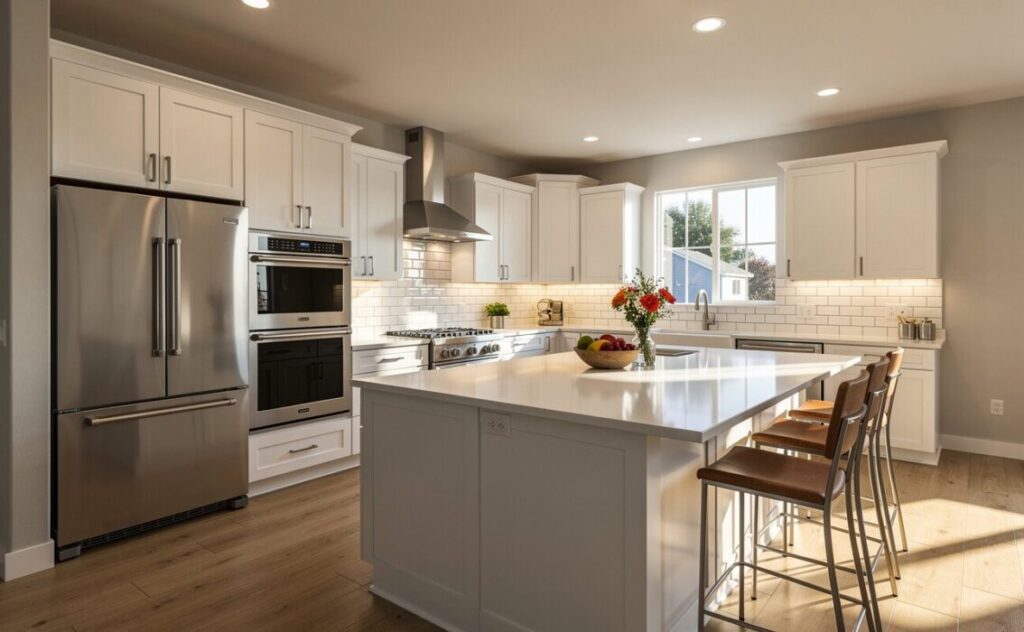
Inside and out merge when you repeat materials. Pocket glass walls essentially vanish, opening up the space and giving you an unbroken view. Fixed glass transoms and panes that reach the walls help link the kitchen and garden. Consistent flooring, shared materials, and open layouts – all these elements blur the line between your indoor and outdoor areas, making for a smooth connection.
Choosing the right openings: glass walls, folding and sliding doors
Picking the right openings for your home is important. Folding doors, big glass walls, and sliding doors make a seamless link between inside and out. These options let you open up to decks or patios, pulling natural light right into your kitchen. They give you the best views and create an open, airy kitchen that moves easily from one outdoor spot to another.
French doors and pass-through windows for easy garden access
French doors connect your home to the outdoors. They make garden views better and let sunlight into the kitchen. A pass-through window also links inside with outside. It often includes a bar for seating. These details make it easy to get to the garden, even in small kitchens or city yards.
Maximizing natural light and framing garden views
Glass doors let natural light into a kitchen, even when shut. Place kitchen counters where you can look out at nature – maybe a pool deck. It keeps you connected to the outdoors.
Choosing cabinetry, colours, and finishes that bridge inside and out
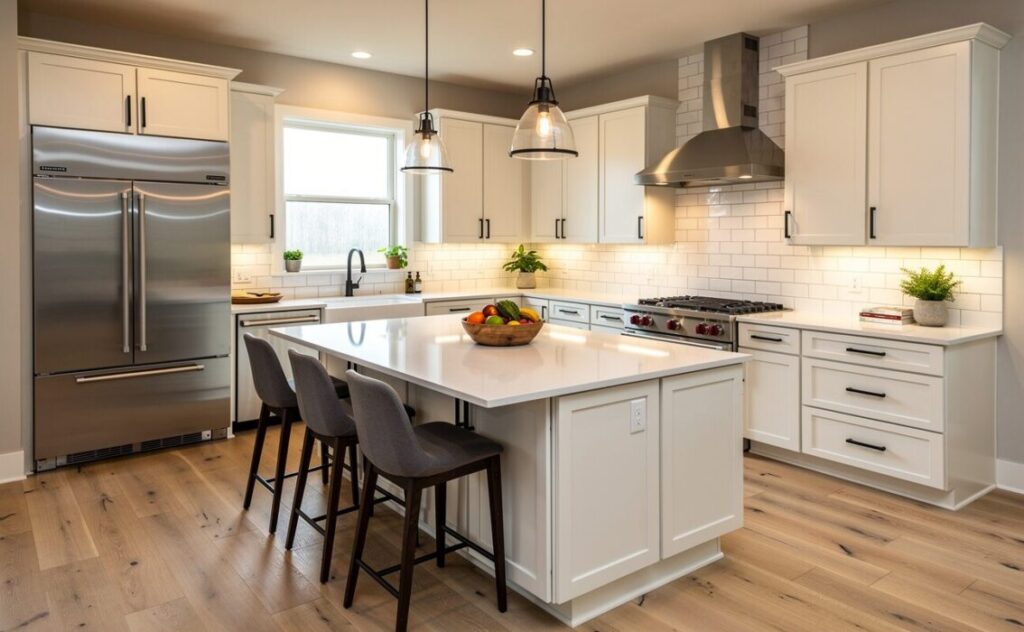
Picking cabinets, colors, and finishes to connect indoor and outdoor areas takes thought. Choose a unified color palette and tough materials. This keeps things looking seamless as you move from inside to out.
Matching cabinet colours to your garden palette
Match your cabinet colors to the garden outside. This crafts a kitchen with a nature-inspired feel. Pick greens, blues, and warm wood tones for your color scheme. It creates a smooth flow between your indoor kitchen and the garden.
Refinishing vs. replacing: the smarter, lower-waste refresh
Refinishing old cabinets usually makes more sense than ripping them out. It cuts down on waste, keeps usable materials out of landfills, and skips the resource-heavy cycle of manufacturing new units – a greener fit for a garden-connected kitchen. A fresh coat also re-ties your cabinets to a new garden-inspired palette without the cost of a full remodel.
Local climate can also influence the right finish choice. In places like Colorado, where strong sun, dry air, and frequent temperature swings can affect how materials age, a durable cabinet finish matters even more – especially in kitchens with large windows, patio doors, or indoor-outdoor layouts. For homeowners planning this kind of update locally, professional cabinet painters in Denver can help color-match the cabinets to the overall design scheme and apply a smooth, long-lasting finish that feels more polished than a typical DIY brush job.
Durable finishes that handle sun and humidity from open doors
An indoor-outdoor kitchen needs tough finishes. They have to stand up to sun and humidity, especially with open doors. Stone countertops work well. So do stainless steel appliances and strong cabinets. Think about antimicrobial surfaces too; they help with hygiene.
How do you plan the outdoor kitchen side of the connection?
Designing the outdoor kitchen side means building a practical cooking area. This really expands the home’s living and entertaining spots. We’re talking about cabinets, counter space, an island, seating, and a specific place to cook.
A grill always becomes the outdoor kitchen’s main feature. Maybe it’s built-in; maybe it’s a freestanding model. Make sure there’s plenty of surface area and counter space for prep work. Try for a “work triangle” so you can prep food, cook, and serve easily. Adding a sink and refrigerator – very handy additions – keeps drinks and ingredients close by. Outdoor lights help you see at night, too.
How does your local climate shape the design?
The local climate really shapes how useful and well-designed an indoor-outdoor kitchen will be. If the weather can be a bit temperamental, a covered patio ensures you can still enjoy being outside. Putting screens on the patio keeps bugs out, making it a true indoor-outdoor space. But covering that area right outside the kitchen can dim the natural light inside your home.
In hotter places, air-conditioned comfort matters a lot. Cooler weather means a fire pit or outdoor fireplace will extend how long you can use the space. Retractable screens give you options – they block insects or sun when necessary, then pull back for an open feel. A louvered roof helps manage sunlight and airflow too.
Planning your indoor-outdoor kitchen project
Planning is key when you want an indoor-outdoor kitchen that fits your life. Your design needs a clear story. Will you entertain often, or is it for casual family time? Think about how close it sits to your main kitchen, and consider your patio or deck’s size and shape.
Good lighting matters too. You’ll need layers of light to go from cooking tasks to relaxing with friends. Talk to pros for advice, especially if you’re building from the ground up – they’ll have ideas you might miss. Every part of the design should balance what’s practical with looks and comfort.
