
- Only late-season, unblemished fruit earns a place in the store; early cultivars are for eating and cooking now.
- Pick slightly under-ripe, keep the stalk attached to the fruit, and leave windfalls out of the crop entirely.
- Aim for 4-7°C, dark, slightly humid and well ventilated, and never let the fruit sit below about 2.8°C.
- Lay the apples in single layers that do not touch, in trays or shallow cartons that let air move on every side.
- Mid-season cultivars give you four to eight weeks, late ones several months, as long as you pull out ripening and rotting fruit as you go.
A tree in a good year drops more fruit in a fortnight than a household eats in two months, and the surplus does not wait politely on the kitchen worktop. Storing apples successfully has far less to do with the box you choose than with three decisions made before a single fruit reaches a shelf: which apples you keep back, how you take them off the tree and what the room does at four in the morning.
This guide settles those three, then puts numbers on the result, so you know whether you are looking at six weeks of eating or six months.
- Not every apple is worth storing
- Pick for the store, not the fruit bowl
- Sort the crop before it goes in
- Containers: storing apples in cardboard boxes, trays or crates
- The best way to store apples is a set of four numbers
- How to store apples in the UK: choosing the room
- Keep them away from onions, potatoes and each other
- How to store cooking apples and how to store Bramley apples
- How long do apples last?
- How to store apples for winter: checking the store
- When the harvest outgrows a shelf
- The short version
- FAQ
- Similar posts:
Not every apple is worth storing
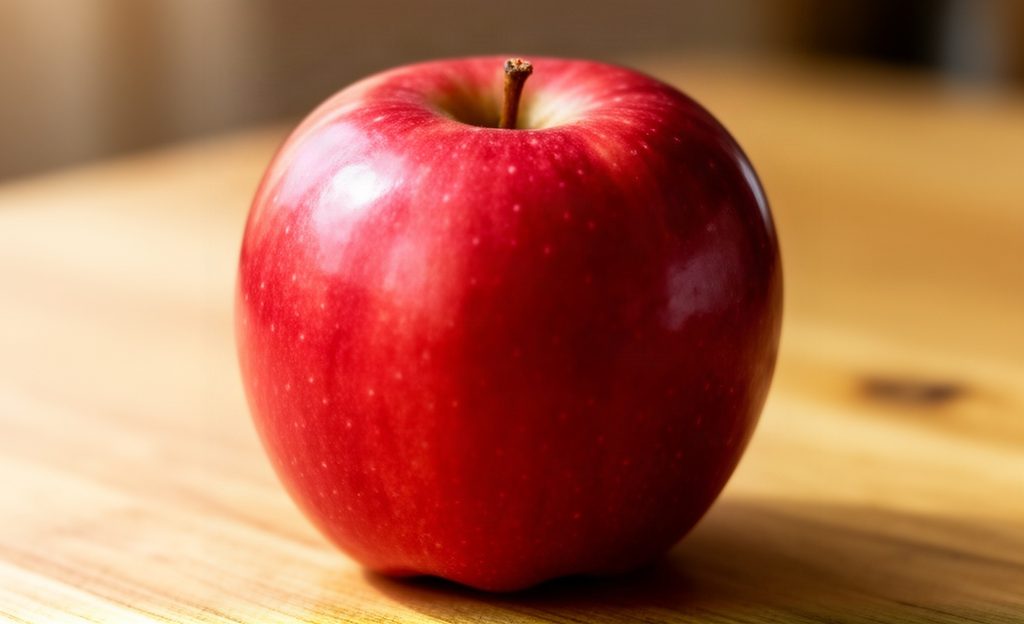
Storage life is largely written into the cultivar. Late-ripening apples keep for considerably longer than early-season ones, which is why the RHS names varieties such as ‘Jonagold’, ‘Winston’ and the culinary ‘Bramley’s Seedling’ as the ones worth the shelf space. Early apples are not a failure of storage; they are simply fruit to eat, give away or cook within days.
Beyond the variety, the selection rules are unforgiving, and every one of them exists because rot needs a way in:
- Blemish-free fruit only. Bruising, scab, insect damage and split skin all break the barrier that keeps fungi out.
- Medium and smaller fruit first. Smaller apples consistently outlast larger ones from the same tree, so the biggest specimens belong in the kitchen queue, not the store.
- Stalk intact. A torn stalk leaves an open wound at exactly the spot where moisture collects.
- No windfalls. Fruit that has hit the ground is bruised whether you can see it or not.
Storing apples you already suspect will not last is the most common way a whole tray is lost, because one fruit failing in November takes its neighbours with it.
Pick for the store, not the fruit bowl
Fruit picked slightly under-ripe stores best, and fruit picked early in its harvest window stores longer than fruit left on the tree until it is perfect. That runs against instinct: the apple you would choose to eat today is the wrong apple to put away.
Take each fruit off the spur with a gentle lift and twist rather than a pull, so the stalk stays on the apple and the fruit spur stays on the tree. Set the apples into the picking container instead of dropping them. Bruised flesh does not show for several days, so a crop that looks immaculate at the end of the afternoon can already be compromised.
When exactly your particular tree reaches that stage is a question of cultivar and season rather than calendar date, and it deserves its own answer separately from this one.
Sort the crop before it goes in
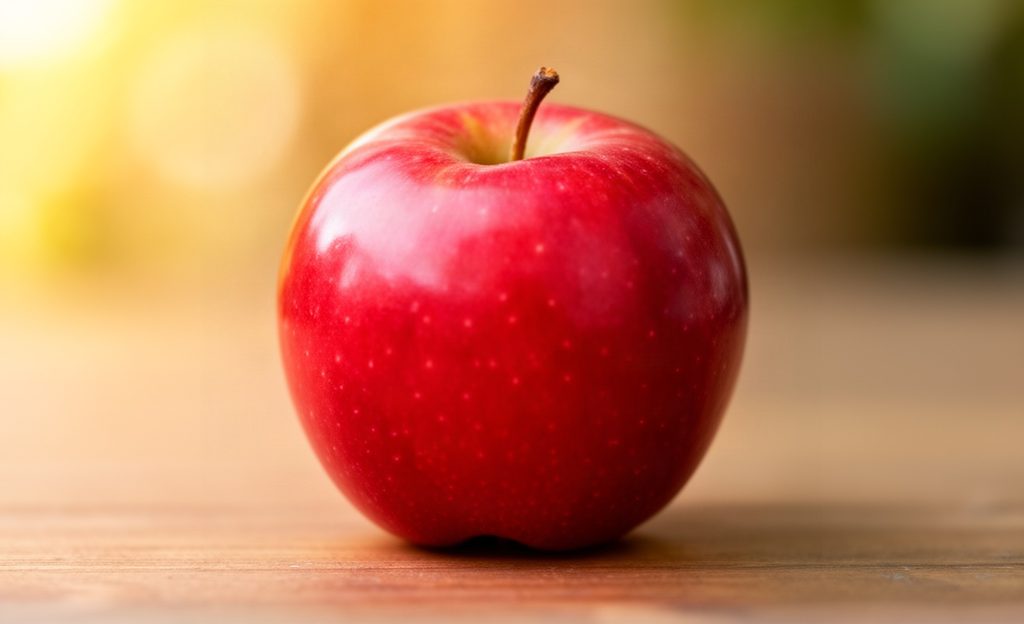
Sorting is where two different mechanisms are dealt with at once. The obvious one is rot: fungal infections such as brown rot and grey mould spread from a single damaged fruit through the fruit touching it. The less obvious one is ethylene. Ripening apples release this gas continuously, and it accelerates ripening in everything nearby, so a tray that reaches eating ripeness in the middle of a stack pushes the trays around it along with it.
Both mechanisms have the same practical consequence. Handle each apple once more before it goes into store, and:
- discard anything soft, split, punctured or bruised;
- keep cultivars in separate trays, because they ripen at different rates;
- keep mid-season fruit away from late-season fruit, so the early failures do not sit next to the crop you want in February;
- label every tray with cultivar and date, because by January you will not remember.
Containers: storing apples in cardboard boxes, trays or crates
Any container works if air can move through the sides and over the top, and none works if it cannot. That single requirement rules out sealed plastic tubs, bin bags and stacked boxes pressed flat against one another, and it rules in slatted shelves, crates, moulded trays and shallow wooden boxes.
Cardboard is a perfectly good option, with two conditions. Leave the box open rather than taping the flaps shut, and separate the fruit with a paper or cellulose interlayer so apples are not resting against each other. If you stack cartons, leave a gap between them: air circulation is what keeps temperature and humidity even through the middle of a stack, and a tight stack has a warm core.
Wrapping each apple individually in paper slows moisture loss and isolates any fruit that fails. It also makes your monthly inspection four times slower, which is why most growers wrap only the fruit they intend to keep longest.
Harvest size | What to store it in | What the container has to do |
A few kilos | Moulded trays or shallow boxes on a shelf, single layer | Let air reach every fruit and let you see the whole tray at a glance |
20-100 kg | Open shallow cartons with paper or cellulose interlayers, stacked with gaps | Keep fruit apart in layers and keep air moving between the stacked boxes |
Several hundred kilos and up | Bushel cartons or ventilated pallet boxes | Ventilate through the load, take mechanical handling and allow temperature monitoring inside the stack |
The best way to store apples is a set of four numbers
Once the fruit is sorted and the container is right, the outcome is decided by the room. Four conditions matter, and three of them are commonly got wrong.
- Temperature: 4-7°C, and not below about 2.8°C. Commercial stores run colder, at 0-1°C for cultivars that tolerate it and 3-4°C for chilling-sensitive ones, but they hold that temperature to within a degree. A domestic space cannot, and apples held too cold develop low-temperature disorders such as soft scald, soggy breakdown, core flush and internal browning. The domestic range is warmer because it is the range you can actually maintain without risking either frost or chilling injury.
- Humidity: slightly humid. Commercial storage sits at 90-95% relative humidity. Dry air costs you weight and texture, and shrivelled skin is the usual sign that a garage is too well ventilated rather than too warm.
- Darkness. Keep the store dark.
- Air movement, without a draught. Circulation is what stops warm and cold pockets forming through a stack, so leave space around and between containers rather than filling a shelf wall to wall.
Two further things belong on the list because they end more stored crops than temperature ever does: the store must be frost-free, and it must be free of mice. Apples must also be kept away from paint, fertiliser and onions, which is a separate problem covered below.
How to store apples in the UK: choosing the room
In practice the British question is not what the ideal figure is but which room hits it. From October onwards, an unheated garage, a north-facing outbuilding, a cellar or a well-insulated shed will typically sit in the 4-7°C band for months at a time. A kitchen at 18°C will not, and neither will a conservatory or a loft.
Three checks settle it faster than guesswork. Leave a thermometer in the space for a week in October and read the overnight minimum, not the daytime average. Look for a space with a solid floor and some thermal mass, because a thin-walled plastic shed tracks the outside air almost exactly and will freeze in January. And be honest about mice: an outbuilding with gaps at floor level needs the fruit in a closed crate or on a shelf they cannot reach.
If no space qualifies, the fridge is a legitimate fallback for a small quantity. Put 2-3 kg of fruit into a plastic bag, pierce several holes so air can move, and keep the bag away from other produce.
Keep them away from onions, potatoes and each other
Apples take on strong smells, which is why the RHS advises keeping them clear of onions, paint and fertiliser, and why quince belongs in a separate room altogether. That is a taint problem and it does not shorten storage life; it just makes the fruit unpleasant.
The ethylene problem is the more expensive one. Apples release ethylene as they ripen and as they begin to break down, and other produce releases ethylene at apples. The practical rule from commercial guidance is to store apples on their own or to ventilate the store properly. Potatoes are the classic mistake in a domestic cellar: they want different temperature and humidity from apples, and the ethylene drifting off the fruit does them no favours.
How to store cooking apples and how to store Bramley apples
Culinary cultivars follow the same rules with one difference in what counts as failure. With a dessert apple, softening flesh ends its useful life. With a cooking apple destined for a crumble or a sauce, texture matters far less, so the only thing that really ends the fruit is rot. That is part of why late culinary varieties are among the best keepers: ‘Bramley’s Seedling’ is named by the RHS as a cultivar worth storing, and several months in a good store is a realistic expectation.
The one adjustment worth making is grading by size. Bramleys run large, and large fruit stores less well than small fruit from the same tree, so put the biggest apples at the front of the queue and keep the medium ones for late winter. Because culinary apples are usually picked in quantity, they are also the crop most likely to outgrow a shelf, which changes the packaging question rather than the storage principles.
How long do apples last?
The honest answer depends on the cultivar, on how early in its window it was picked and on how stable the store is. These are the figures to plan around.
Method | Realistic life | What it depends on |
Mid-season cultivars, cool dark store | 4-8 weeks | Fruit unblemished and checked regularly |
Late-season cultivars, cool dark store | Several months | Stable temperature above 2.8°C, no ripening fruit left in the stack |
Small quantity in a perforated bag in the fridge | A few weeks | 2-3 kg per bag, kept away from other produce |
Commercial refrigerated storage | 30-90 days by cultivar | Held near 0°C at high humidity |
Controlled atmosphere storage | 6-7 months | Oxygen reduced to 3-5% and monitored continuously |
Maturity at picking shifts every one of those figures. Commercial guidance puts fully ripened apples at under a month, partially ripe fruit at two to three months and properly mature fruit at up to six months with close monitoring.
How long do apples last in the fridge
A few weeks for most cultivars, and longer than any warm room will give you. The crisper drawer is the right compartment, a perforated bag holds humidity around the fruit without trapping ethylene, and the fruit needs to be separated from vegetables rather than sharing a drawer with them. The limit is space rather than physics: a fridge takes a bowl of apples, not a harvest.
How to store apples long term
Beyond roughly two months, everything depends on removing failures early and keeping the temperature flat. Choose the latest-ripening cultivar you grow, pick at the early end of its window, wrap individually, keep trays in single layers and inspect monthly. Anything past six months in a domestic store is unusual, because that is the territory where oxygen control rather than refrigeration does the work.
How to store apples for winter: checking the store
Putting fruit away is the short part of the job. Keeping a crop through to February is a matter of removing whatever is about to fail before it takes anything else with it.
Look over the trays weekly for the first month, while the fruit that was damaged at picking declares itself, then monthly. On each pass, remove any apple with a soft patch, a wrinkled shoulder or visible mould, and take out any tray that has reached eating ripeness rather than leaving it to gas its neighbours.
The symptoms are worth reading rather than just acting on:
- Shrivelled, leathery skin – the air is too dry.
- Brown, glassy or discoloured flesh under sound skin – too cold for that cultivar, or simply stored too long.
- Soft brown patches spreading from one point – rot; that fruit and its immediate neighbours come out.
- Fruit ripening far faster than expected – ethylene is accumulating, so the store needs more ventilation or fewer ripe trays.
When the harvest outgrows a shelf
Above a few hundred kilos, the principles do not change but the equipment does, because ventilation, handling and monitoring all have to work through a load rather than around a tray.
At that scale the fruit goes into bushel cartons of 14 or 18 kg, or into ventilated pallet boxes that let air pass through the load and can be moved by machine. Interlayers stop the fruit from bearing on itself in a deep box. Because you can no longer see the middle of a stack, temperature is measured rather than assumed: a data logger left inside the load for the season shows the overnight minimum in the coldest corner, which is the number that causes chilling injury.
Ethylene is the other thing that changes with volume. In a closed store it accumulates, and either ventilation or a scavenger has to remove it. Potassium permanganate sachets, the standard passive option, oxidise ethylene as it reaches the sachet and saturate over time, so they are consumables to be replaced during a long store rather than fitted once. AgroCentre stocks 5 g and 9 g absorber sachets and an EF 100 AS absorber filter alongside 60-day and 90-day temperature loggers.
The short version
Sorting and temperature do more for a stored crop than any container ever will. Pick late cultivars slightly early, throw out everything marked, give each fruit air on all sides, hold the store between 4 and 7°C and look through the trays once a month. Do those five things and the difference between eating your own apples in October and eating them in February is simply which variety you planted. If you are packing a crop rather than a bowlful, our overview of fruit and vegetable packaging sets out the cartons, inserts and trays that suit different volumes.
FAQ
Can you store apples in a shed or garage?
Yes, provided the space stays between about 4 and 7°C, never drops to freezing and is dark. An unheated brick or block garage usually qualifies from October; a thin-walled plastic shed tracks the outside temperature too closely and will freeze the crop in a cold snap.
Do apples need to be wrapped in newspaper?
No, but wrapping slows moisture loss and stops a failing fruit touching its neighbours. It also makes inspection slower, so it is best kept for the fruit you intend to hold longest.
Can apples and pears be stored in the same place?
Keep them in separate trays. Pears tolerate colder storage, down to 0°C, and they ripen quickly enough to need checking daily, so mixing them with apples means one of the two crops is being managed wrongly.
Why have my stored apples gone brown inside?
Internal browning and core flush usually mean the fruit was held below the temperature its cultivar tolerates, or held sound for longer than its natural storage life. Both are invisible from the outside, which is why a thermometer in the store is worth more than a monthly guess.
