
The best outdoor spaces invite people to slow down and enjoy their surroundings. A patio, terrace, or garden becomes more welcoming when it offers comfort, encourages conversation, and reflects the style of the home itself. Choosing high end outdoor patio furniture can provide inspiration for creating an outdoor environment that balances beauty, durability, and everyday function. When each design decision supports the next, the outdoor living area feels like a natural extension of the home instead of a separate space.
- Begin With the Way the Space Will Be Used
- Create Comfortable Areas for Gathering
- Choose Materials That Last
- Connect the Outdoor Space With the Home
- Add Layers of Lighting
- Include Natural Elements
- Leave Room for Flexibility
- Small Details Complete the Experience
- Outdoor Living Should Feel Effortless
- Similar posts:
Begin With the Way the Space Will Be Used
Every successful outdoor design starts with purpose. Before selecting furniture or decorative details, it helps to think about how the space will support everyday life. Some patios become places for family meals, while others serve as quiet retreats for reading, relaxing, or enjoying the evening air.
Understanding these priorities makes every later decision easier. Furniture, lighting, and accessories all work together more effectively when they support the activities that matter most.
Designing with daily routines in mind creates outdoor spaces that remain enjoyable throughout the seasons.
Create Comfortable Areas for Gathering
Comfort often determines how much time people spend outdoors. A well-planned seating arrangement encourages conversation while giving everyone enough personal space to relax.
Grouping chairs and sofas around a coffee table or fire feature naturally brings people together. The layout should also leave clear pathways so movement through the space feels easy and comfortable.
Adding a variety of seating options creates flexibility for both small family evenings and larger gatherings with guests.
Choose Materials That Last
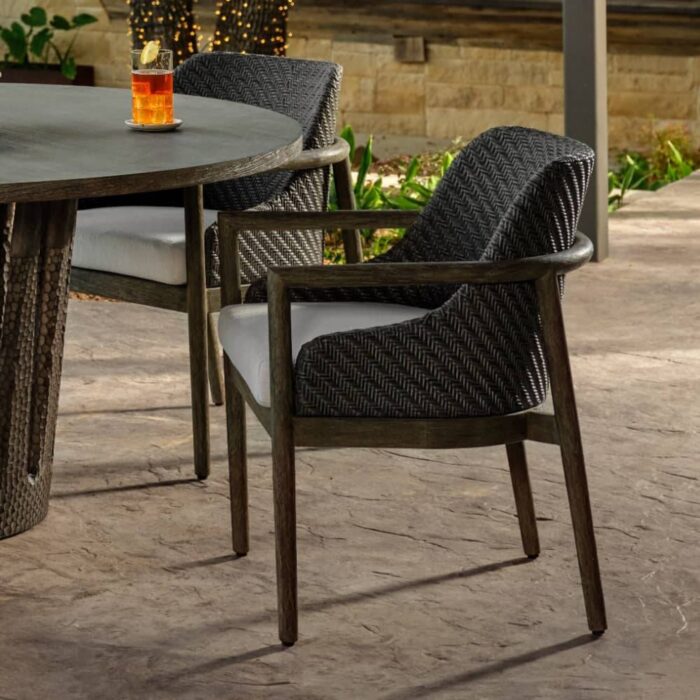
Outdoor furniture must perform well in changing weather while maintaining its appearance over time. Selecting durable materials helps preserve both comfort and visual appeal through years of regular use.
Weather-resistant metals, quality wood, woven materials, and performance fabrics each offer different advantages. The best choice depends on the local climate, the level of maintenance desired, and the overall design style.
Durable materials allow homeowners to enjoy their outdoor spaces with confidence while reducing the need for frequent replacement.
Connect the Outdoor Space With the Home
A patio feels more inviting when it reflects the design language found indoors. Repeating similar colors, materials, and finishes creates a smooth visual transition between interior and exterior spaces.
Natural stone, warm wood tones, soft fabrics, and coordinated decorative accents help establish this connection. Building on this mix of natural materials, stone can also be introduced on vertical surfaces to strengthen the connection between the home and outdoor space. Compared with wood, brick, or traditional natural stone, cultured stone for feature walls provides a distinctive textured look while providing greater design flexibility for outdoor fireplaces, seating areas, and covered patios. It can also complement surrounding landscaping and other finishes, helping the entire outdoor area feel more cohesive and thoughtfully designed. Even small details such as planters, side tables, or outdoor rugs contribute to a more unified appearance.
When the outdoor area feels connected to the home, the entire property appears larger and more cohesive.
Add Layers of Lighting
Furniture creates the structure of an outdoor room, while lighting shapes its atmosphere after sunset. Layered lighting allows people to enjoy the space safely while creating a warm and welcoming environment.
Soft overhead fixtures, wall lights, pathway lighting, and portable lamps each serve a different purpose. Together they provide enough illumination for dining, entertaining, and relaxing without overwhelming the landscape.
Thoughtful lighting also highlights architectural features and extends the enjoyment of outdoor living well into the evening.
Include Natural Elements
Gardens feel more inviting when furniture works alongside the surrounding landscape instead of competing with it. Trees, flowering plants, ornamental grasses, and seasonal containers soften the edges of patios while introducing color and texture.
These natural elements create a peaceful setting that changes throughout the year. They also provide opportunities to frame seating areas and establish greater privacy.
Blending furniture with landscaping helps every part of the outdoor environment feel intentional.
Leave Room for Flexibility
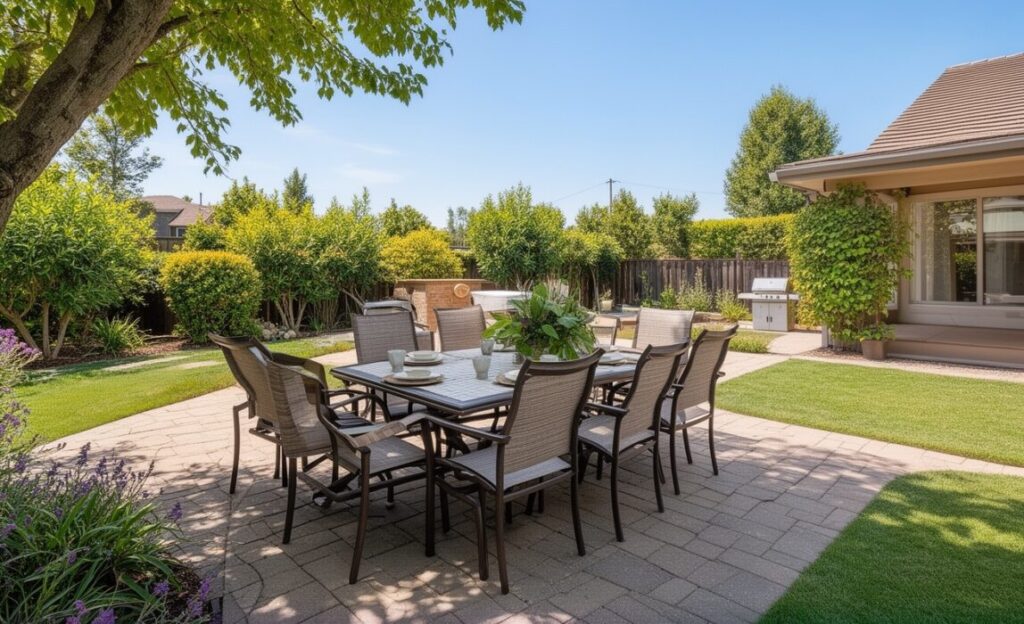
Outdoor living often changes with the seasons and with different occasions. Flexible furniture arrangements allow homeowners to adapt the space for quiet mornings, family dinners, or celebrations with friends.
Lightweight accent tables, movable seating, and modular pieces provide options without requiring a complete redesign. This flexibility keeps the outdoor area useful throughout the year while supporting a wide range of activities.
A versatile layout makes it easier to enjoy the space in new ways over time.
Small Details Complete the Experience
The finishing touches often have the greatest impact on how an outdoor space feels. Cushions, planters, lanterns, outdoor artwork, and carefully selected accessories introduce personality while making the environment more comfortable.
These details should support the overall design rather than compete for attention. A restrained approach allows quality furniture, thoughtful landscaping, and attractive architecture to remain the focus.
When every element feels connected, the space becomes both beautiful and relaxing.
Outdoor Living Should Feel Effortless
The most memorable outdoor spaces succeed because they combine comfort, function, and timeless design. Furniture provides the foundation, while lighting, landscaping, and carefully chosen materials create warmth and visual balance.
Approaching the design as an extension of the home encourages greater continuity between indoor and outdoor living. With thoughtful planning and attention to detail, even a modest patio can become a favorite place to gather, unwind, and enjoy every season in comfort.
