
- Recommended Tree Species for Arizona Desert Landscapes
-
Shrubs for Color, Texture, and Screening in Arizona Desert
- Calliandra (Fairy Duster) for Attracting Pollinators
- Dalea Species for Delicate Texture and Winter Color
- Eremophila (Emu Bush) for Resilience
- Justicia for Hummingbird Attraction
- Texas Sage (Leucophyllum) for Low Maintenance
- Senna Shrubs for Prolific Blooms
- Tecoma (Yellow Bells, Orange Jubilee) for Vibrant Color
- Lantana for Continuous Blooms
- Hopbush for Screening
-
Cacti and Succulents for Architectural Interest
- Columnar Cacti for Vertical Accents
- Golden Barrel Cactus for Striking Form
- Prickly Pear (Opuntia) for Iconic Desert Look
- Agave for Drought-Tolerant Rosettes
- Aloe for Winter Color and Easy Care
- Hesperaloe (Red Yucca) for Year-Round Appeal
- Dasylirion (Desert Spoon) for Fountain-like Shape
- Yucca Species for Bold Form and Flowers
- Portulacaria afra (Elephant’s Food) for Containers
- Groundcovers for Spreading Color and Erosion Control
- Ornamental Grasses for Movement and Texture
- Vines for Vertical Greenery
- Perennials for Sustained Blooms
- Similar posts:
Recommended Tree Species for Arizona Desert Landscapes
Arizona’s desert has many different trees. They need little water and grow well in heat, sun, and poor soil. These tough trees provide shade, structure, and homes for wildlife in xeriscape gardens. Their dropped leaves enrich the dirt. They also grow pretty flowers.
Some popular choices are palo verde, mesquite, Texas ebony, desert willow, and Mesquite. Palms work well too – they drop little debris, a good option near pools.
Palo Verde Trees for Shade and Spring Color

Palo Verde trees (Parkinsonia) grow naturally in the deserts of the Southwest and Mexico, often found in arroyos and foothills. You can spot these desert plants by their green or blue-green bark and branches, which actually handle photosynthesis for the tree. Each spring, they burst with bright yellow flowers, adding a splash of color to the landscape. They love hot summer weather, but how well they handle cold varies by type.
Palo Verdes need full sun, and their soil must drain well. Give them a deep drink now and then during the summer. Pruning helps shape the tree; avoid trimming them in summer to prevent sunburn. These trees offer shade, food, and cover, making them a good home for wildlife.
Mesquite Trees for Adaptability and Wildlife

Mesquite trees (Prosopis species) fit well into Arizona’s desert landscape. These native plants don’t need much water. They grow in all kinds of soil, whether it’s wet or dry. If a drought hits, they just slow their growth to survive.
You’ll spot mesquites by their dark green leaves and rough, dark bark. They have a twisted, sculptural shape. In spring, creamy yellow flowers bloom, followed by seed pods. These pods become food for wildlife. The flowers also draw in native bees and other pollinators.
Mesquites offer lots of habitat. They give desert animals shade, food, and shelter. To stay upright and reach water, these trees grow deep, wide root systems. Expect a broad canopy – some get quite large.
Texas Ebony Trees for Structure and Security

Texas Ebony trees (Ebenopsis ebano) come from the lowland parts of the Gulf of Mexico. They grow from southern Texas down into northeastern Mexico. These trees expand slowly, reaching about 25 feet tall and 20 feet wide when fully grown. People like using Texas Ebony in yards and patios – it makes a great specimen plant. You can also plant it as a screen or barrier. Its thorns even offer security, making it a favorite for both structure and safety in harsh desert settings.
Desert Willow Trees for Unique Blooms

Desert Willow (Chilopsis linearis) grows quickly, a deciduous tree at up to 25 feet. This plant, native to the southwestern U.S. and northern Mexico, has unique, trumpet-shaped flowers. They look like orchids. These fragrant blooms appear in clusters from May to October, showing off white, pink, and purple colors. Hummingbirds love them. Its glossy green leaves mimic willow foliage, and its interesting branch structure makes it appealing in desert settings.
Acacia Trees for Diverse Forms and Uses
Acacia trees suit desert landscapes well. They come in many forms and have several uses. These arid region plants offer shade, privacy, and fantastic flower displays. Acacias need full sun. They also handle different soil types. They do not need much water. However, deep, regular watering helps them grow strong roots. Australian acacias-for example, the Bailey acacia-have special leaf stems. We call these phyllodes, and they work like leaves.
Evergreen Elm Trees for Dense Summer Shade
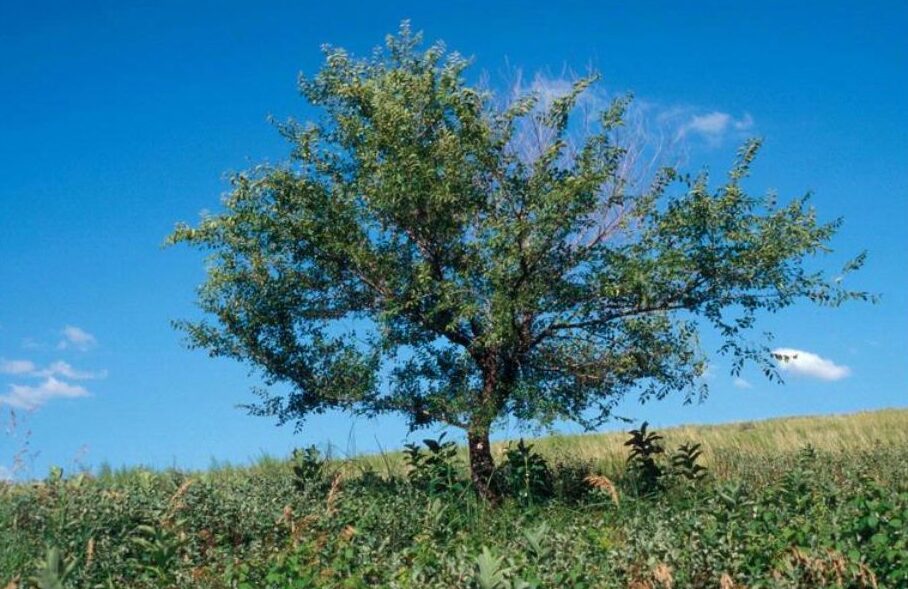
The Evergreen Elm (Ulmus parvifolia) offers thick summer shade. Its long branches arch, forming a rounded crown. This tree, also called lacebark or Chinese evergreen elm, grows fast. It hits 30 feet in just 8 years. A mature tree averages 35 feet tall and 35 feet wide; that depends on how much water it gets and the soil quality. These elms use water well once their roots take hold.
Shrubs for Color, Texture, and Screening in Arizona Desert
Shrubs work well in Arizona’s desert landscape, bringing color, texture, and privacy. These plants need little water and hold up to drought. They also require minimal care, making them perfect for gardens focused on saving water.
A shrub can be an accent piece, a border, a hedge, or a screen. Many types have naturally pleasing shapes, so you won’t need to cut them back often.
Calliandra (Fairy Duster) for Attracting Pollinators
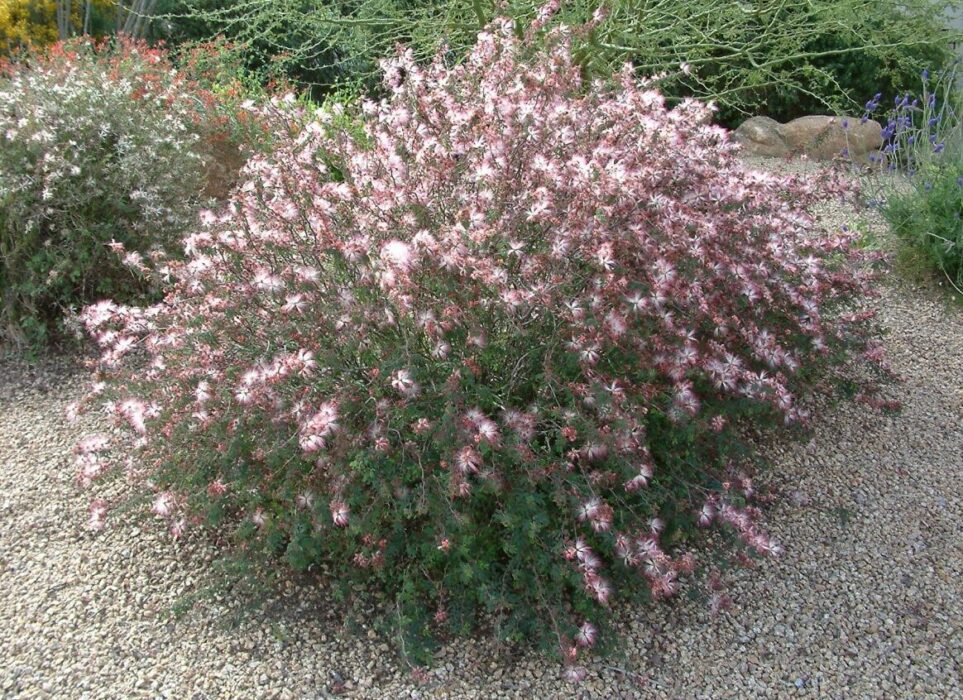
Calliandra, often called fairy duster, draws hummingbirds and other pollinators with its soft blossoms. These shrubs handle dry conditions well. They also love full sun and grow in almost any soil. Fairy duster needs little pruning to keep its rounded shape and bounces back fast after frost. Its leaves stay green most of the year, bringing color to wildlife gardens.
Dalea Species for Delicate Texture and Winter Color
Dalea species are native Southwest desert plants. There are nearly 200 varieties, all known for their delicate texture and winter to early spring color. These shrubs grow 1.5 to 5 feet tall – they tolerate hot summers well. Their pea-like flowers come in purple, rose, and yellow. Bees and butterflies love them. Birds, like quail, dove, and finches, eat their seeds. This helps local wildlife.
Eremophila (Emu Bush) for Resilience
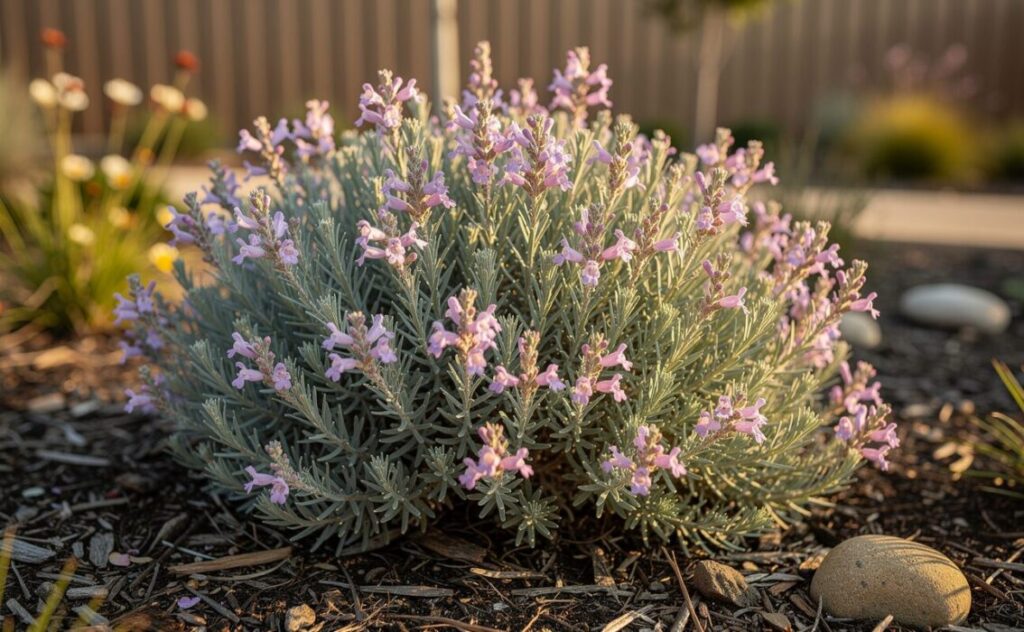
Emu bushes, or Eremophila, are evergreen shrubs. They come from Australia’s semi-arid and arid regions. These plants handle drought well, surviving long times without rain. This makes them perfect for desert gardens. Eremophilas grow in many soil types, even those common in the Southwest. Their tubular flowers bring in pollinators – hummingbirds and other nectar eaters love them.
Justicia for Hummingbird Attraction
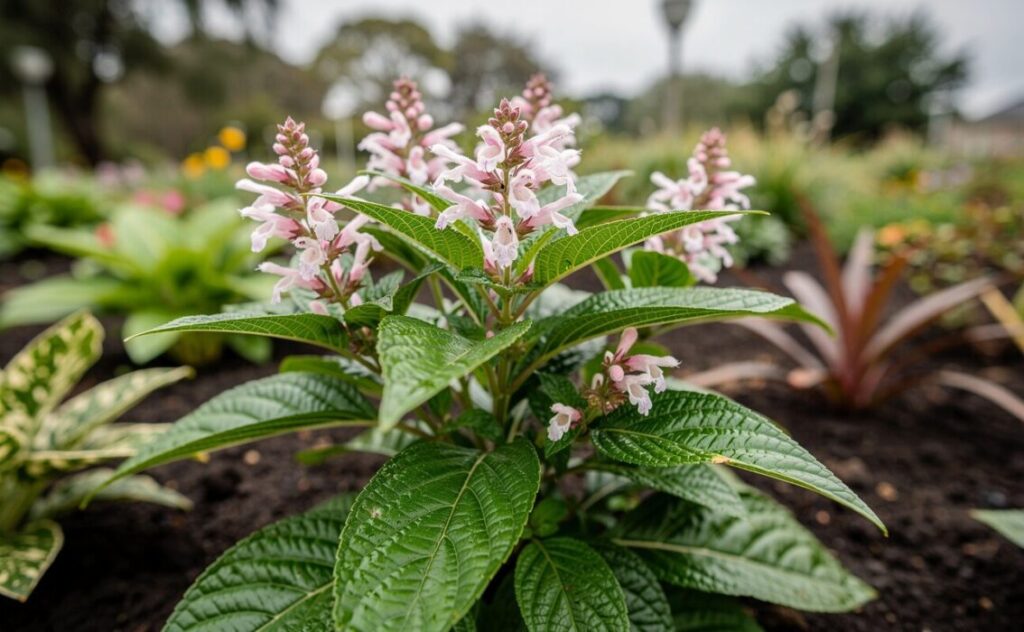
Justicia shrubs, also called Desert Honeysuckle, bring in hummingbirds. Their long, tubular flowers do the trick. These are evergreen plants, originally from tropical and subtropical areas, and they bloom all year. They love warm weather and need deep watering, but not too often. Tough desert natives, Justicias grow well in Arizona, New Mexico, Colorado, Nevada, and southern California.
Texas Sage (Leucophyllum) for Low Maintenance

Texas Sage (Leucophyllum) is a tough, low-maintenance shrub. It’s perfect for Arizona xeriscape designs, needing little water. These evergreens come from native Texas and Mexico soil.
They love full sun and need well-draining soil to stay healthy. Temperatures as low as 10 degrees Fahrenheit don’t bother them, and they handle summer heat with ease. Choose the right size – they come in many – and you won’t need to prune.
Many different animals find homes in these shrubs. After summer monsoons, they get with color – earning them the nickname “barometer plant.” They rarely need extra water, but be careful not to overwater, or root rot can set in.
Senna Shrubs for Prolific Blooms
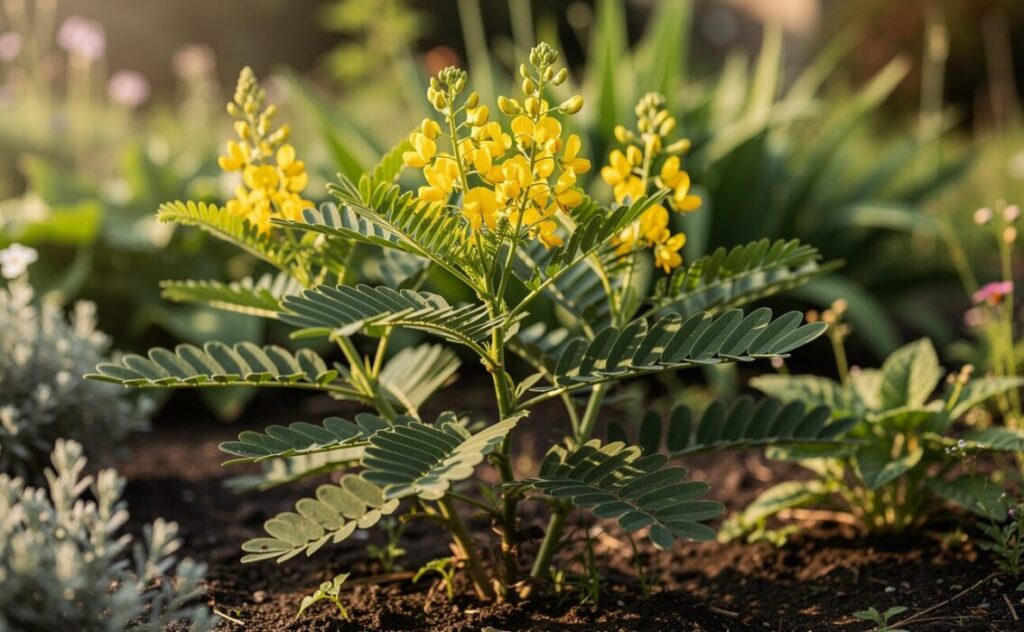
Senna shrubs grow naturally in Australia, Africa, and North America’s warmer areas. They put out lots of flowers. These flowering plants usually have delicate foliage and bloom from late winter into spring. Some summer-blooming types even drop their leaves though.
Grow them for a screen; they reach 6 to 8 feet tall and wide when mature. Sennas need full sun but handle cold differently depending on the type. They like soils that drain fast, but can manage heavier soils if watered deeply and not too often. Once established, these drought-tolerant shrubs need little extra water or fertilizer.
Their bright yellow flowers draw in pollinators like butterflies and bees. After this show of color, you’ll see many seed pods.
Tecoma (Yellow Bells, Orange Jubilee) for Vibrant Color

Yellow Bells and Orange Jubilee – Tecoma species – splash bright summer color across desert gardens. These shrubs bloom from April through November, showing off clusters of yellow or orange, bell-shaped flowers. Hummingbirds flock to them.
Their bright green leaves help cool things down in summer. You can plant Tecoma with other evergreens to make natural screens or barriers. As fall rolls in, pencil-like seed pods grow, feeding songbirds through the winter. This builds up the local wildlife habitat.
Lantana for Continuous Blooms

Lantana blooms non-stop in the desert, painting the landscape with color all through the warmer months. These shrubs love heat – they draw in butterflies and hummingbirds. Once it takes root, lantana handles drought easily and needs little water. It does best in full sun. You can use it as groundcover, in pots, or as a small shrub.
Hopbush for Screening

Hopbush (Dodonaea viscosa) makes a good evergreen screen for desert yards. It grows fast and thick, giving you privacy and breaking the wind. This shrub needs little water and grows in many soil types, so it’s easy to care for. Expect it to get 10-15 feet tall and wide. Small flowers appear, then papery, winged seed capsules follow – a nice touch for the season. The leaves can be green or reddish-purple; it depends on the type and how much sun it gets.
Cacti and Succulents for Architectural Interest
Cacti and succulents add a distinct, sculptural look to Arizona’s desert. These plants hold water, a clever adaptation to dry conditions. They come in many shapes, textures, and sizes – truly a focal point in any garden. Best of all, these desert dwellers need little care; full sun and good drainage keep them happy. They are key to xeriscaping, saving water and making yards look great.
Columnar Cacti for Vertical Accents
Columnar cacti add vertical lines and shape to desert gardens. These towering, upright plants create dramatic focal points, clearly marking garden areas. They don’t need much water and, once rooted, are very easy to care for. Expect columnar cacti to do best in full sun and soil that drains well – a true sign of how tough desert plants are.
Golden Barrel Cactus for Striking Form

Golden Barrel Cacti are known for their golden spines and spherical shape, giving desert gardens a unique look. These slow-growing plants eventually get quite big, standing out in any landscape.
They handle drought well, thrive in full sun, and need soil that drains fast. Golden Barrels are easy to care for. Gardeners often plant them in groups or alone to add structure to dry gardens.
Prickly Pear (Opuntia) for Iconic Desert Look
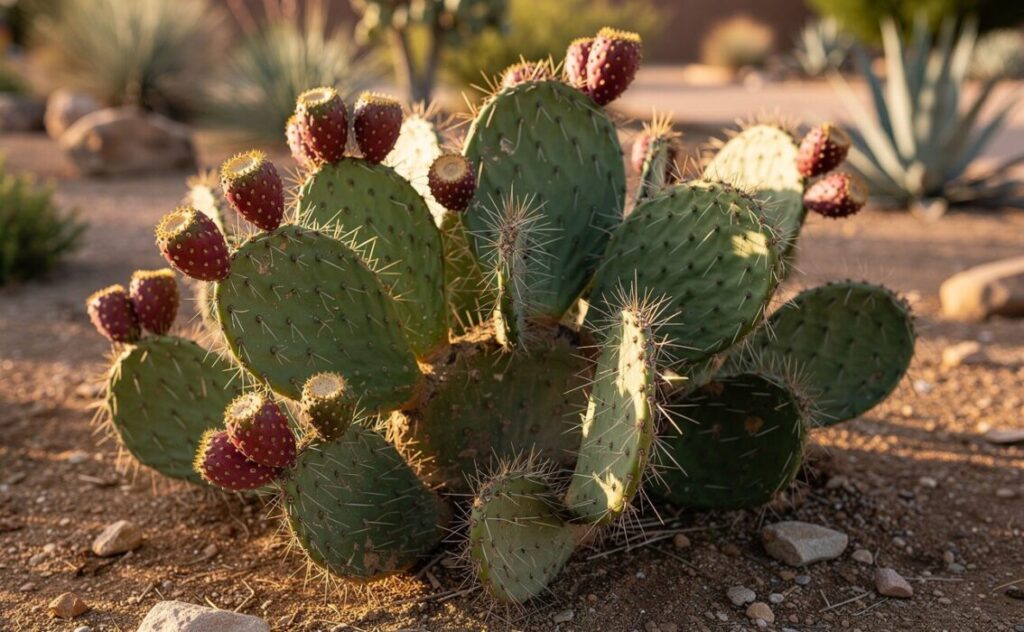
Prickly Pear cacti (Opuntia) offer an iconic desert form with their flat, paddle-like stems. These plants handle drought well, growing in full sun and various soil types. Opuntia species add unique texture and shape, helping create the classic desert look. They require little care and provide ornamental appeal.
The Santa Rita Prickly Pear stands out for its purple shades; other types have pads from pink to green. These cacti grow bright flowers and edible fruits, drawing in local wildlife.
Agave for Drought-Tolerant Rosettes

Agaves are stunning leaf succulents. Their rosettes come in all sorts of colors, textures, and sizes. These plants handle dry conditions well, adapting easily to the desert. They put up with heat, cold, and bad soil. Also called century plants, agaves usually flower just once after 5 to 50 years. They shoot up a huge stalk, then die. But they often make offsets, seeds, or bulbils – new plants are common.
Smaller agave types work well in pots or mixed with groundcovers and wildflowers. Plant them in fall or late winter. Water deeply, but not often. Parry’s Agave stands out as a cold-hardy variety.
Aloe for Winter Color and Easy Care

Aloe succulents deliver beautiful winter and early spring color to Arizona gardens. They mostly come from southern and eastern Africa. Their long-lasting flowers draw hummingbirds.
These plants come in many shapes – from low groundcovers to tall, tree-like types. Small clustering kinds work well in pots. The larger tree forms stand out as accents or fill out mass plantings.
Aloes handle heat and drought well, loving full sun in winter. They do better with some shade and occasional water in summer. Good drainage is key for these easy-care plants. But watch out for aloe mites. Aloe ‘Blue Elf’ – a compact variety – is a popular choice for its bright looks.
Hesperaloe (Red Yucca) for Year-Round Appeal

Red Yucca (Hesperaloe) is an evergreen perennial that forms clumps, beautiful year-round in desert settings. This succulent handles drought well, giving landscapes a strong vertical line and amazing flower spikes. It is very tough, thriving in both heat and cold.
Hesperaloes love sunny spots and soil that drains fast, but they can deal with heavier soils too – as long as you don’t give them too much water. Hummingbirds flock to the tubular blooms, which span from creamy shades to deep reds and brighten summer for a long time. These ornamental grasses adjust to local rainfall, needing only a little extra water during dry spells.
Dasylirion (Desert Spoon) for Fountain-like Shape

Dasylirions, also called Desert Spoon, are native succulents. They handle drought well. These plants grow into a fountain shape, their slender leaves spreading five to six feet across when mature. They also tolerate cold – down to zero degrees Fahrenheit. As succulents, they hold water in their centers. This makes them easy to care for and good at filling gaps in desert gardens.
Yucca Species for Bold Form and Flowers

Yucca plants make striking evergreen accents. They bring architectural appeal and beautiful white flowers. These succulents come in many textures, making them focal points next to softer shrubs.
Yuccas need full sun and good drainage. They can handle cold winters. They do well with little water, but a deep soaking once a month in summer helps them thrive. The best time to plant yuccas is in fall or winter. Their sharp outline works well for background plantings. Old leaves guard the plants against sunburn, cold, and bugs.
Portulacaria afra (Elephant’s Food) for Containers
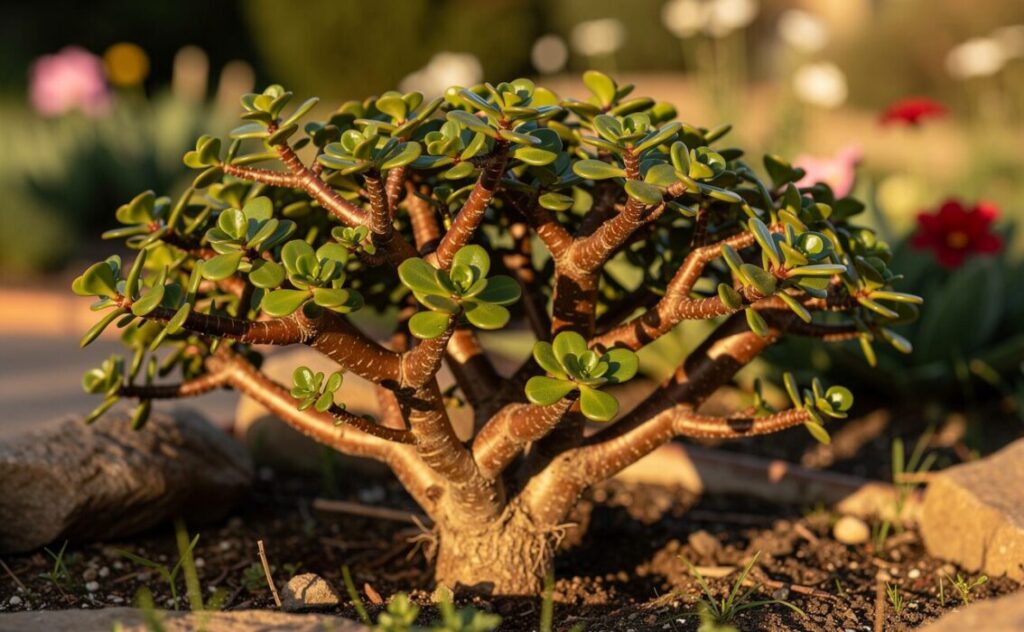
The succulent Portulacaria afra, also known as Elephant’s Food, does well in containers and on terraces. It tolerates drought and needs little care. This plant is known for its ability to pull carbon from the air. You’ll need to protect it from winter frost, but it handles desert heat just fine. Its small, round, fleshy leaves and reddish stems grow into a thick, attractive shape.
Groundcovers for Spreading Color and Erosion Control
Groundcovers brighten Arizona desert landscapes with spreading color. They also help control erosion. These low-water plants tie the landscape together, hold soil in place, and cut down on dust. They even keep water from evaporating off the soil. Many groundcover types handle drought well, growing strong in the desert. They add blankets of color, fill bare spots, and offer a soft, different texture. This makes for a green and water-smart landscape design.
Angelita Daisy for Year-Round Blooms
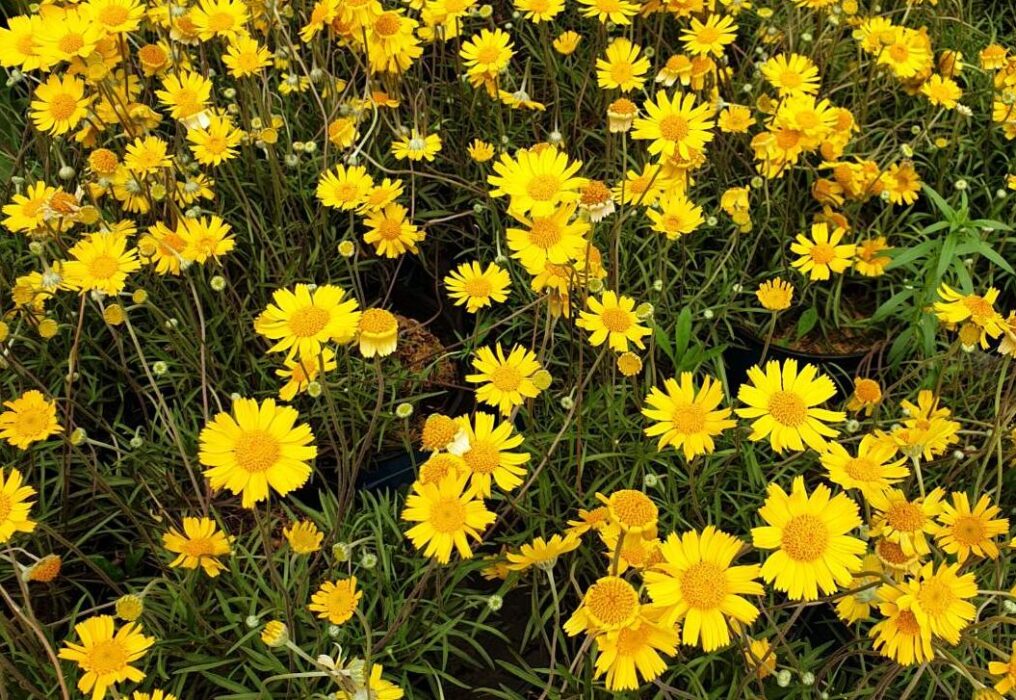
Angelita Daisy (Tetraneuris acaulis) is a perennial groundcover that blooms all year in the low desert. This native plant produces sunny, yellow, daisy-like flowers. They bloom heavily in spring and keep going through the rest of the year. The plant forms compact clumps, growing about 1 foot tall and 1 to 2 feet wide.
Plant Angelita Daisy 1 foot apart for a good border or a flowering groundcover. It likes full sun and needs water weekly in summer after it settles in. Try planting it with purple verbena – they make striking combinations.
Evening Primrose for Nighttime Fragrance

Evening Primrose (Oenothera species) fills desert nights with perfume. These plants – either spreading or clumping – are native to North American plains, grasslands, and deserts. Their large, eye-catching flowers have four petals, coming in pink, white, or yellow. This creates a bright splash of color. Most stay open until midday, even though they bloom at night.
Tufted evening primrose (Oenothera cespitosa) grows moderately in clumps. Its fragrant white flowers turn pink as they fade. These blooms open at dusk and close by early morning, drawing in hawk moths and other night pollinators. Saltillo Primrose (Oenothera stubbei) is another type.
Evening Primroses are versatile, growing well in full sun or light shade. They look good in groups or as groundcover under desert trees like palo verdes or mesquites. These perennials mix easily with other wildflowers. Many desert songbirds eat their seeds, and night-active animals visit their flowers.
Verbena for Seasonal Splashes of Color
Verbena loves the heat, a perennial groundcover that bursts with color from spring through summer. Planted in groups, these offer vibrant splashes of seasonal color. Verbena needs full sun and sandy, well-draining soil to really thrive.
During bloom times, water them weekly – this will brighten the flowers. Cut back on watering once the blooms fade. A light touch of nitrogen in hot summers can pick them up, but they don’t need much fertilizer beyond that. Snip off dried flowers and old leaves in early summer; it makes them look better. Verbena doesn’t live long, but some types drop seeds and spread on their own.
Trailing Rosemary for Ground Coverage
Trailing Rosemary – Rosmarinus officinalis ‘Prostratus’ – is a groundcover that handles dry conditions. It has aromatic leaves and blue flowers. This plant likes full sun and soil that drains well, so it works in desert gardens. The shrub grows low, its fine texture spilling over walls, and stays green all year. Deer typically leave it alone. Bees love it.
Ornamental Grasses for Movement and Texture
Ornamental grasses add softness, movement, and texture to desert settings. They look great next to walls and bigger plants. These plants offer something to see all year and give birds a place to live. Many varieties need little care, handle dry weather, and grow well in different soils, which helps with sustainable landscaping and xeriscaping. Pink muhly grass is a favorite for its color, texture, and how it sways in the wind.
Muhlenbergia (Deer Grass, Pink Muhly) for Low Maintenance
Muhlenbergia grasses, like Deer Grass (Muhlenbergia rigens) and Pink Muhly (Muhlenbergia capillaris), are easy to care for. These clumping, non-invasive plants come from the southwestern US and northern Mexico. You can use them in many ways – as tall accents, to soften rocks, or in thick clumps to stop erosion on hillsides. They handle drought, heat, and cold well. Most kinds of soil work for them. They love full sun but can take some shade too.
Rainfall usually keeps them alive. Still, a little extra water in summer helps. These grasses mostly sleep through winter. No serious pests bother them. Their leaves provide seeds, shelter, and nesting material for many wild animals.
Vines for Vertical Greenery
Vines offer a great way to add greenery and color to yards in the Arizona desert. These plants use little water and cover walls, fences, and pergolas – softening harsh architectural lines. Many types handle drought and intense sun, even thriving in the heat. Beyond looks, they bring in pollinators, helping local garden life. Most vines do need something to grow on.
Bougainvillea for Color and Vertical Growth
Bougainvillea brings a splash of color to Arizona desert yards. The plant is famous for its stunning, vivid bracts, which give off an intense color. It loves full sun and handles dry spells once its roots take hold, making it great for xeriscape designs. You can train it up walls, over pergolas, or along fences – a great way to add height. Bougainvillea needs good drainage. It also likes frost protection when the weather turns cold. Its many blooms make a desert yard feel a bit more tropical.
Perennials for Sustained Blooms
Arizona desert gardens need plants that last. Perennials give continuous color and blooms. Many tolerate drought well, needing little water but staying vibrant. These plants draw in pollinators and help build wildlife habitats – a real ecological boost. You can use perennials for borders, as single standout plants, or to replace annuals. They live longer and are a great sustainable choice.
Penstemon for Hummingbird Favorites
Penstemon perennials are famous for their trumpet-shaped flowers. Hummingbirds love these blooms, which come in a range of colors – orange, red, purple, and white. Some penstemons grow as low groundcovers with short flower spikes. Others form small rosettes at their base, sending up tall, lasting floral stalks.
These plants do best in full sun, but hot desert areas need some shade from reflected heat. They handle seasonal temperature shifts well and must have good drainage. Penstemons are drought-tolerant; they need little water in cooler months and only occasional watering during dry summer periods. They reseed easily, which keeps the flowers coming back year after year.
Salvia (Sage) for Fragrance and Diverse Colors
Over 750 Salvia species exist, known commonly as Sage. These plants offer many shapes, leaf types, and seasonal colors. Their fragrant, long-lasting flowers shoot up from rounded shrubs in spikes or tight clusters. Many Salvia varieties bloom in cool blues, purples, or lavenders. But some show off bright reds, scarlet, orange, yellow, or white too.
Lots of species originally grew in dry areas, so they work well in xeriscape gardens. Salvias draw in hummingbirds, butterflies, and bees – great for local wildlife. Some types smell strong enough to keep rabbits away. All Salvia plants are safe to use. People even put some kinds in medicine, as herbs, or in teas.
Damianita Daisy for Compact Blooms
Damianita Daisy (Chrysactinia mexicana) is a small, evergreen perennial. It grows to about a foot tall and wide. The plant has bright yellow, daisy-like flowers. These flowers bloom most in spring and fall, though you might see some in mild weather. This daisy likes full sun and soil that drains well. Once it settles in, it needs very little water. Damianita Daisy offers steady color for desert gardens. It works well in borders or rock gardens and doesn’t need much care.
