
Garden work does not spread itself evenly across the year. It arrives in bursts, and each burst carries a deadline set by the plants rather than by the calendar. Mulch needs to go down before weeds germinate. Dormant pruning has to finish before buds swell. Leaf cleanup only works once most of the leaves are actually down, which in much of the country means a three-week window and nothing more. Crews that struggle in season are rarely short on skill. They are short on sequence. The same two people who handle forty properties comfortably in July fall behind in April, because April asks for six different kinds of work at once and every one of those jobs believes it is first in line. The backlog does not announce itself either. It arrives as one property pushed a week, then two, then a client asking why the beds were mulched after the weeds had already come through.
None of that gets easier by working longer days.
The season is shorter than the work list
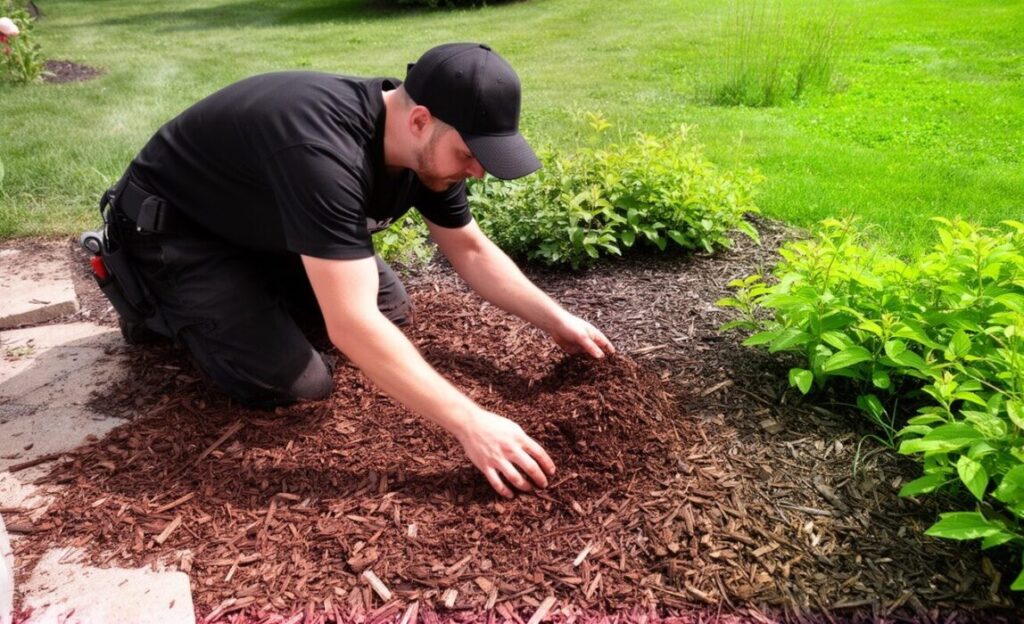
Spring compresses cleanup, mulching, bed edging, first cuts and new plantings into six weeks or so, and fall repeats the trick with leaf removal, dormant feeding, tender plant protection and irrigation blowouts. Between those two peaks the work is steady. Most operations staff for that steady middle and then try to survive the ends, which is how a business ends up carrying the right headcount for nine months of the year and the wrong one for the three months that decide whether the season was profitable. Hiring for six weeks rarely fixes it either. Everyone in the trade is recruiting in the same window, chasing the same small pool of people who already know how to run a mower without scalping a slope.
That leaves the schedule as the only lever anyone actually controls.
What helps is separating work with a hard biological deadline from work that merely feels urgent. Pre-emergent applications and dormant pruning cannot slide. Bed redesigns, hardscape repairs and container plantings usually can, and clients accept a postponed redesign far more easily than they accept a spring cleanup that lands in June. Sorting the list that way before the season starts turns a panic into a queue.
Route order decides how much fits in a day
On paper a crew has eight working hours. In practice they have five or six, once loading, driving, unloading and fuel stops are counted. Two properties eleven miles apart can cost more in transit than the smaller of the two jobs is worth.
Clustering by neighborhood recovers more time than any other single change.
It also makes the day predictable, which matters when one job runs long and everything behind it shifts. Most crews start with a spreadsheet and a group chat, and that combination holds until the property count passes thirty or so. After that, the version of the schedule sitting in the office stops matching the version in the truck, and somebody spends an evening reconciling the two. That is the point where owners start looking at software for lawn care companies and comparing what the different options actually track: route order, crew hours, materials used per property, or all three. The useful test is simpler than any feature list. Will the crew still be opening it in August, when nobody has patience for extra taps on a phone?
Treatment windows do not move for you

Anything involving pests, disease or fertility runs on its own clock. Grub treatments work in a narrow band tied to egg hatch. Horticultural oil goes on before leaf-out. Scale crawlers stay vulnerable for days, not weeks. Miss the window and the application either fails outright or has to be repeated at your own cost.
Follow-up visits carry the same constraint. A treatment set at a fourteen-day interval that lands on day twenty-two is a different treatment, and usually a weaker one.
When those return visits live only in someone’s memory, they slide behind whatever felt loudest that morning. Operations that handle pest and disease work outgrow a general calendar faster than mowing-only crews, because every visit generates a scheduled return, and by midsummer those returns stack across dozens of properties. Dedicated pest control scheduling software handles that pattern by attaching the return visit to the original job instead of leaving it as a separate thing to remember. Whether that justifies a second system depends on how much of the revenue comes from treatment programs rather than one-off visits, and most owners know that number without looking it up.
Weather rewrites the week, so build for it
Two rain days in a row do not delay work by two days. They delay it by two days plus whatever the ground needs to dry, and the backlog lands on a week that was already full. Spray work brings its own ceiling, since wind above about ten miles per hour puts the application somewhere other than the target.
Two habits separate the crews who absorb this from the ones who drown in it.
First, a flexible half-day each week that starts empty and takes whatever slipped. Second, a decision made in advance about which jobs get pushed, so that call is not being made at six in the morning by whoever happens to answer the phone.
It also helps to know which work is genuinely weather-independent. Pruning in light rain is unpleasant but fine. Mulching wet beds is fine. Mowing saturated turf is not, and doing it anyway costs more in ruts and repair than the visit ever earned.
What the client actually notices
Clients rarely evaluate horticultural judgment. They evaluate whether someone arrived when it was promised, whether they heard about it beforehand, and whether they can tell what was done afterward.
A message the evening before a visit kills most of the calls that interrupt a crew’s morning.
A note left behind, even three lines about what was cut, fed or treated, does more for renewal rates than an extra half hour of edging. Both of those are scheduling problems before they are communication problems, since neither one is possible if the office does not know where the crew will be tomorrow.
Seasonal pressure never fully leaves this trade. The work is tied to living things, and living things do not negotiate. What can change is how much of the pressure comes from the plants, and how much comes from a schedule that quietly stopped matching reality sometime in early May.
