
Dallas homeowners invest heavily in outdoor kitchens, covered patios, and backyard entertainment areas. The average professionally designed outdoor living space in the Dallas metro area runs between $25,000 and $80,000, depending on the scope and materials. Many of these spaces are genuinely beautiful when photographed. And from approximately June 15 through September 10, most of them sit empty.
The problem is not the investment. The problem is that most outdoor living spaces in North Texas are designed without accounting for the specific conditions that make Dallas one of the most challenging climates in the country for outdoor residential design, conditions that turn an expensive outdoor kitchen into an unusable heat trap for roughly 90 days every year.
- The Numbers That Explain Why This Happens
- Surface Temperature: The Design Factor Most Contractors Skip
- Shade Coverage: 40 Percent Is Not Enough
- Kitchen Orientation: The Problem Nobody Mentions Until After Installation
- Clay Soil: The Foundation Issue Specific to Dallas
- What to Look for When Hiring for Outdoor Living in Dallas
- The Evening Window Is Worth Protecting
- Similar posts:
The Numbers That Explain Why This Happens
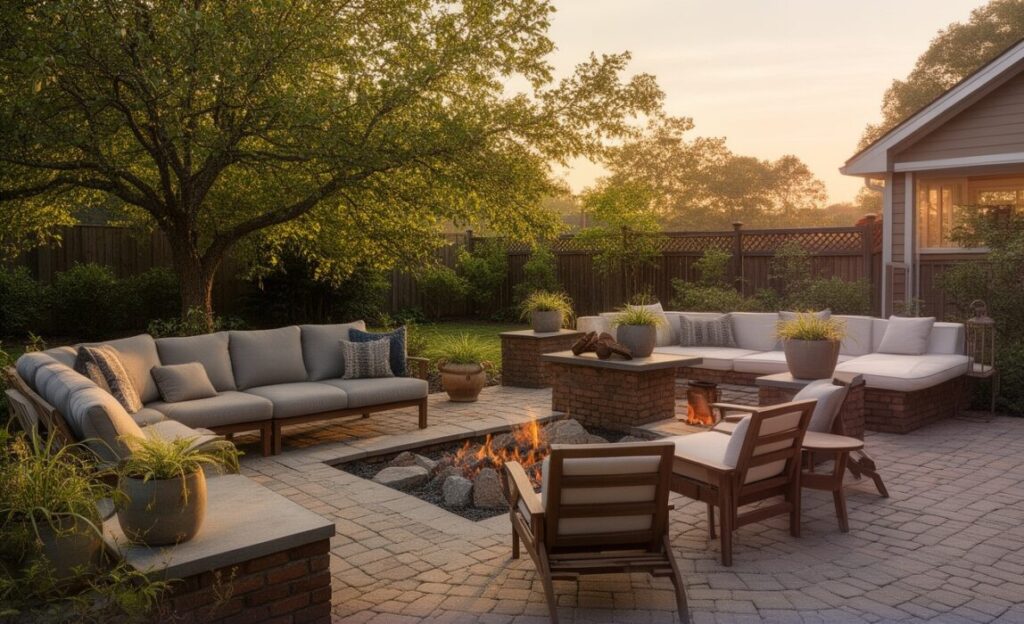
Dallas averages more than 40 days above 100 degrees Fahrenheit annually, with some years reaching 70 consecutive days above that threshold. During July, the peak month, afternoon temperatures routinely reach 104 to 108 degrees by 2 PM, with little meaningful cooling before 7 PM. For practical purposes, this means the functional outdoor use window from mid-June through early September runs from approximately 7 PM to 10 PM on clear evenings.
Outdoor living spaces that are not designed around this reality fail the homeowner every summer, regardless of how attractive they are or how much was spent on their construction. The failure is predictable and entirely preventable, but only when design decisions are made before construction begins, not after.
Surface Temperature: The Design Factor Most Contractors Skip
The most significant and most commonly ignored outdoor living design factor in Dallas is patio surface temperature. Dark concrete, charcoal paver surfaces, and dark natural stone absorb solar radiation and reach surface temperatures of 140 to 160 degrees Fahrenheit during peak July afternoon hours. This is not discomfort, it is a burn hazard. Barefoot contact with a surface at 155 degrees causes tissue damage in seconds.
Light-colored natural travertine and limestone, by contrast, reflect a significantly larger portion of incoming solar radiation and stay 30 to 45 degrees cooler under identical sun exposure. Texas A&M AgriLife Extension research on outdoor surface temperatures in Texas confirms this temperature differential consistently across summer measurement periods. A travertine patio surface measuring 110 degrees at 2 PM on the same July afternoon that sends dark concrete to 155 degrees is still uncomfortable, but it is usable. A 155-degree surface is not.
The surface temperature decision is made at the material specification stage, before a single stone is set. It cannot be corrected after the fact without complete removal and rebuild. Homeowners who discover their dark patio is unusable in July are facing either several more years of avoidance or a full demolition and replacement.
Shade Coverage: 40 Percent Is Not Enough
Standard open pergola structures with climbing vines at full maturity provide 40 to 60 percent overhead shade coverage. During Dallas July afternoons, this is insufficient. Forty to sixty percent shade coverage still allows direct solar radiation to reach the patio surface and seated occupants at angles that make extended outdoor sitting uncomfortable at temperatures above 95 degrees.
Outdoor living spaces in Dallas that are genuinely usable through summer afternoons, not just evenings, require solid-roof shade structures providing 85 to 100 percent overhead coverage during peak sun hours. This means solid-roof pergolas, covered outdoor rooms with insulated roofing, or retractable awning systems with sufficient coverage area. Ceiling fans integrated into covered structures provide an additional 6 to 8 degree effective temperature reduction through evaporative cooling at outdoor ambient temperatures.
Kitchen Orientation: The Problem Nobody Mentions Until After Installation
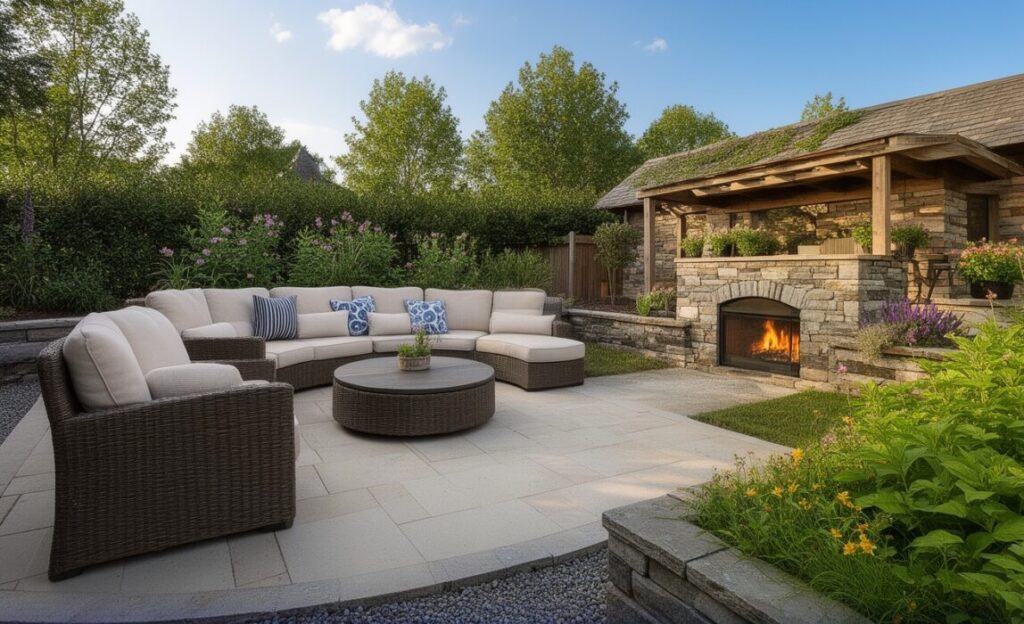
Outdoor kitchen positioning relative to prevailing wind direction is the design decision that most consistently separates enjoyable outdoor living spaces to use from those that drive guests back inside. Dallas and the broader North Texas area have a dominant prevailing wind from the south-southeast during the summer months. This is not a variable, it is a consistent, measurable pattern.
An outdoor kitchen positioned so the cook faces south or southeast when grilling means the cook works into the prevailing wind, and smoke flows directly into the seating area where guests are sitting. This arrangement makes entertaining at the outdoor kitchen significantly less pleasant, regardless of how well everything else is designed. Repositioning the grill so the cook faces north, the opposite of the prevailing wind direction, routes smoke away from seating without any technology, screening, or mechanical intervention.
This single orientation decision, made at the design phase, is free. Correcting it after an outdoor kitchen is built typically requires complete kitchen demolition and rebuilding.
Clay Soil: The Foundation Issue Specific to Dallas
North Texas Blackland Prairie clay soil creates a structural challenge unique to Dallas-area outdoor living construction that homeowners from other regions frequently do not anticipate. This clay expands by up to 15 percent of its volume when wet and contracts sharply during summer drought, applying seasonal pressure to any structure built on or near it without engineering that accounts for this movement.
Outdoor living structures built in Dallas without engineered footings extending below the active clay movement zone develop visible settling and structural cracking within 3 to 5 years. This is not a quality issue with the surface construction, it is a foundation engineering issue that appears regardless of construction quality when the sub-surface preparation does not address clay behavior. Properly engineered footings require excavation to below the active clay zone and appropriate footing size for the structure’s load, which is more expensive at construction time but prevents the complete rebuilds that inadequate foundations require.
What to Look for When Hiring for Outdoor Living in Dallas
The design decisions described above, surface material selection, shade coverage percentage, kitchen orientation, and clay soil foundation engineering, are not optional details. They are the factors that determine whether a Dallas outdoor living investment delivers year-round value or sits empty through the three months when North Texas heat is most extreme.
Contractors providing professional outdoor living services in Dallas, TX that are genuinely equipped for North Texas conditions will ask specific questions about sun exposure patterns, prevailing wind direction relative to the proposed kitchen location, and soil conditions during the initial consultation, before discussing aesthetics, features, or pricing. They will specify materials by surface temperature performance rather than appearance alone, and they will include structural engineering for clay soil foundation requirements as a standard project component rather than an optional upgrade.
Dallas homeowners evaluating contractors should ask directly: What shade coverage percentage does this structure provide during peak afternoon sun in July? What patio surface temperature will this material reach at 2 PM on a 105-degree day? What footing depth does this structure require for clay soil stability? If a contractor cannot answer these questions specifically, the outdoor living space they build is likely to join the large inventory of Dallas backyards that look impressive in photographs and empty all summer in practice.
The Evening Window Is Worth Protecting
A Dallas outdoor living space that is properly designed for summer conditions adds approximately 3 to 4 hours of genuinely comfortable outdoor use per day from May through October, the 7 PM to 10 PM window when temperatures drop to livable levels and outdoor entertaining becomes genuinely pleasant. Across a six-month season, this represents roughly 540 hours of outdoor living time that either exists or does not based on the design decisions made before construction began.
That outdoor time has measurable value in property terms as well. Professionally designed outdoor living spaces consistently rank among the top value-adding improvements for Dallas residential properties, with buyer surveys consistently identifying outdoor kitchens, covered patio rooms, and quality outdoor entertainment environments as premium amenities that affect offer pricing and time on market.
The difference between a Dallas outdoor living space that adds value and one that does not is almost entirely determined by whether the design accounted for July. Getting that part right requires expertise specific to North Texas conditions and it requires getting the important questions answered before a single footing is poured.
