
Homeowners can absolutely be held financially liable if a hired landscaper or neighborhood teen gets hurt on their property. But the specifics depend on the worker’s legal status and the condition of your yard at the time of the accident.
Maintaining a beautiful garden comes with legal responsibilities that stretch well beyond mowing and mulching. As outdoor renovation projects ramp up in 2026, understanding premises liability is critical for protecting your personal assets. Ignore these rules, and a routine landscaping project can snowball into a costly legal dispute faster than you’d expect.
- What’s the Difference Between an Independent Contractor and a Household Employee?
- How Does Premises Liability Apply to Your Yard?
- What Happens if Both the Homeowner and the Worker Are at Fault?
- How Can Homeowners Protect Their Personal Assets?
- The Final Step Before Hiring Landscaping Help
- Similar posts:
What’s the Difference Between an Independent Contractor and a Household Employee?

Your financial liability shifts dramatically based on exactly who you hire for yard work. An independent contractor is typically a professional landscaping company that shows up with its own tools, sets its own schedule, and carries specialized business insurance. Think of the crew with matching trucks and branded uniforms pulling into your driveway every Tuesday.
A household employee, on the other hand, might be the college kid down the street or an individual you direct closely, supply tools to, and pay a regular hourly wage. You’re telling them what to cut, when to show up, and handing them your mower. Homeowners bear significantly more legal risk when hiring household employees, since those workers often don’t carry their own workers’ compensation coverage.
Real-world legal disputes pop up frequently when property owners fail to verify a worker’s status. A homeowners’ association in Illinois recently faced serious legal risks when its landscaping contractor failed to provide workers’ compensation. That gap exposed the property owners to liability, because an uninsured independent contractor could claim to be an “employee” of the association after an injury. The takeaway? Verifying business credentials before any work begins helps prevent these legal overlaps from threatening your savings.
| Characteristic | Independent Contractor | Household Employee |
|---|---|---|
| Tools/Equipment | Supplies their own commercial gear | The homeowner provides the mower or shears |
| Direction/Control | Determines their own methods | Homeowner dictates how and when to work |
| Liability Risk for Homeowner | Generally lower (covered by contractor’s insurance) | Higher (homeowner may be liable for medical bills) |
How Does Premises Liability Apply to Your Yard?
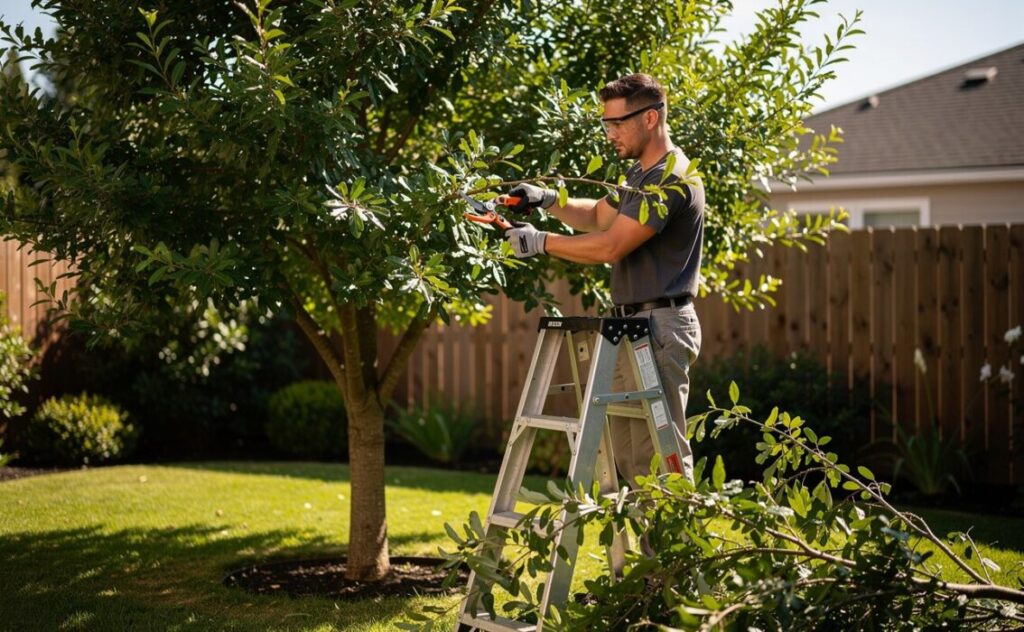
Homeowners have a legal responsibility to make sure their grounds are reasonably safe and free of hidden dangers. Under the legal concept of “notice,” you may be responsible if you had actual knowledge of a hazardous condition and failed to warn visitors about it. Picture this: you know about a dangerous sinkhole near the back fence, but you don’t mention it to your hired gardener. If they step in it and break an ankle, you could be on the hook for the resulting injuries.
Lawn care naturally carries physical risks that can amplify this liability. Roughly 80,000 annual emergency room visits are attributed to lawn mower injuries alone, which should give any homeowner pause. Because injury statistics can vary by source and year, it’s smart to treat these figures as a general warning sign rather than a precise measure of your legal risk.
Even minor structural issues or hidden utility lines can result in major legal action against the property owner. Former reality star Lisa Vanderpump faced a six-figure lawsuit after a handyman fell on the stairs of her Beverly Hills mansion, which shows just how closely property hazards can be scrutinized when someone gets hurt. And the consequences can be far more severe: a landscaper was fatally shocked by a live electrical wire while working in Fort Lauderdale, Florida.
So what kinds of hazards should you be looking for before anyone starts work? Here’s a quick list of the most common culprits:
- Unmarked sinkholes, large concealed animal burrows, or uneven paving stones (the kind you’ve been meaning to fix for two summers now)
- Dead or decaying tree branches, including those from species like the white oak (Quercus alba), hanging over the work area
- Aggressive pets left unrestrained while workers are present; even a “friendly” dog that jumps can cause a fall
- Hidden electrical wires or improperly installed water features that weren’t built to code
What Happens if Both the Homeowner and the Worker Are at Fault?
Sometimes an accident isn’t entirely one person’s fault. Sound familiar? Maybe a yard worker skipped their safety glasses, but the homeowner also left a loose rake buried in tall grass. When both sides share blame, compensation gets adjusted through comparative negligence rules. A court evaluates the actions of both parties and determines a percentage of fault for each.
State laws dictate how this divided fault impacts financial compensation. In some states, if an injured worker is found to be 20% at fault for an accident, their potential financial recovery is reduced by that same percentage. In modified comparative negligence states, a plaintiff is completely barred from recovering damages if their share of the blame crosses a specific threshold. Under the West Virginia degree of fault for personal injuries framework, for example, an injured worker can still recover partial damages if the fault is split down the middle (50/50), but they are legally barred from any compensation the moment their fault is “greater than” the homeowner’s.
Here’s some good news for property owners, though: lengthy courtroom battles over yard injuries are relatively uncommon. Statistics show that more than 95% of personal injury cases are settled before trial. That means most homeowner liability disputes get handled through insurance negotiations rather than public lawsuits (which is great news if you’d rather not have your yard hazards become a matter of public record).
How Can Homeowners Protect Their Personal Assets?
The most effective way to reduce risk is to vet professionals before they ever set foot on your lawn. Always ask for a Certificate of Insurance from a landscaping business to verify that it carries both general liability and workers’ compensation coverage. This one step helps ensure that the contractor’s insurance can cover medical bills if a crew member is injured on your property. If they can’t produce a COI? That’s your cue to keep looking.
Summertime brings added liability risks to residential properties that are easy to overlook. With about 25% of the roughly 140 million annual ER visits occurring during the summer months, outdoor features like hot tubs, unfenced pools, and slippery patios can increase your legal exposure significantly. Carefully securing these backyard features is especially important when you’re bringing in seasonal yard help who aren’t familiar with your property’s layout.
You’ll also want to review your existing property coverage to understand policy limits and exclusions. Check your standard homeowners’ insurance policy to confirm that liability protection is adequate for potential yard accidents. For added protection, consider a personal umbrella policy; it provides another layer of financial coverage against severe injury claims, typically for a relatively modest annual premium.
The Final Step Before Hiring Landscaping Help
A thriving garden should be a source of peace, not the catalyst for a stressful lawsuit. You’ve now got a handle on worker classification, premises liability, comparative fault, and the insurance questions you need to ask. Using properly insured independent contractors and establishing clear boundaries from the start can greatly reduce the chances of a financial dispute.
Before any crew arrives, do a quick safety sweep of your yard to clear hidden hazards. Walk the property yourself, check for loose stones, look up for dead branches, and secure your pets. These simple precautions take fifteen minutes and can save you months of headaches, letting you enjoy your beautiful outdoor space year-round.
