
Homeowners spend a lot of time thinking about which plants will look best along a walkway or how a patio should be positioned to catch the evening light. Far fewer stop to consider how those same choices affect the soil sitting against their foundation. Every tree, downspout, flower bed, and sprinkler head changes how water moves through the ground near a house, and that movement over years decides whether a foundation stays stable or starts shifting.
Plan the yard with the foundation in mind from the start, and there’s no need to sacrifice curb appeal for structural safety. Below are the landscaping decisions that most often cause trouble, along with the adjustments that keep a yard attractive and stable at the same time.
How Landscaping Affects Your Foundation
Soil keeps reacting to moisture long after it’s compacted around a house. Clay-heavy soils in particular expand when they absorb water and shrink as they dry out, and that repeated swelling puts uneven pressure on a foundation over time. Landscaping decisions either work with this reality or against it. A flower bed that traps water against a foundation wall, a tree planted too close to the slab, or a sprinkler zone that overwaters one corner of the yard can each accelerate soil movement in ways that show up later as cracks or uneven floors. Homeowners who notice early warning signs, or who simply want a professional read on their soil and grading before committing to a landscaping plan, often bring in a foundation specialist like Bluebird CFW to assess the site before any digging starts.
That kind of assessment matters because foundation problems rarely start at the foundation itself. They usually start with water that has nowhere else to go. Surface water that fails to drain pools on the surface, works its way down through the soil, and, left uncaught, often ends up as a damp or flooded lower level. This is why landscaping decisions and interior moisture problems are more connected than most homeowners realize; a low spot left unaddressed today can turn into a call for basement waterproofing a few years down the road. Getting the yard right from the outset is a cheaper and less disruptive fix than repairing the damage after the fact.
Tree and Shrub Placement Guidelines
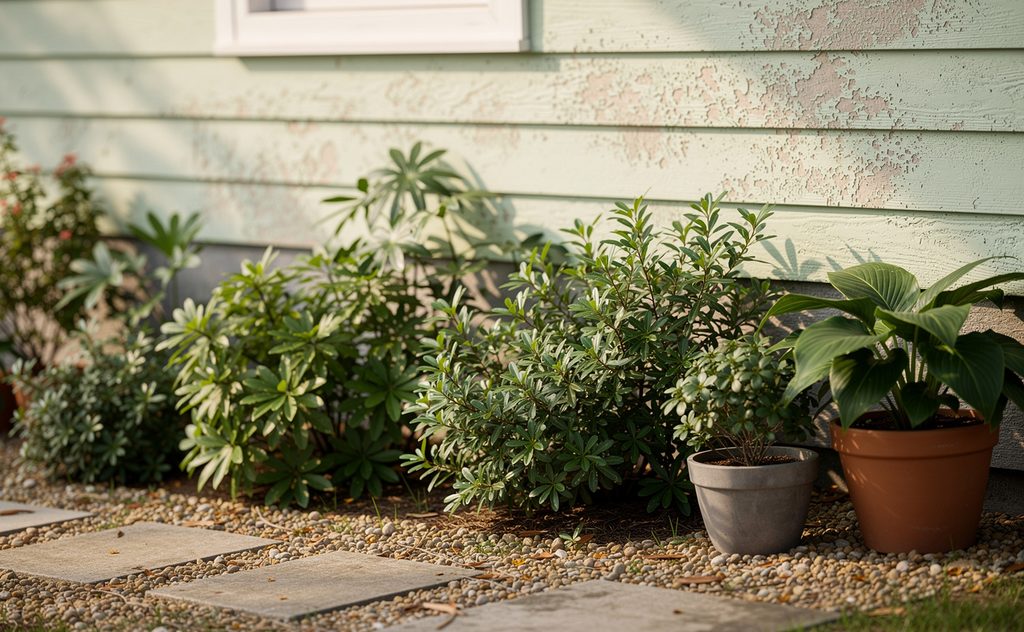
People blame roots first when trees and foundations don’t mix, but moisture usually does more damage than physical root pressure. Large trees draw enormous volumes of water from the soil. Plant one close to a house and it can dry out and shrink the soil directly beneath the foundation on one side while the rest of the yard stays normally hydrated, and that uneven drying is a common cause of settlement cracks. A tree’s mature canopy width is a reasonable stand-in for how far its root system will eventually reach, which makes a species’ full-grown size worth researching before choosing a spot; nursery-pot dimensions, in comparison, say almost nothing about where those roots end up. Slower, steadier tree growth achieved through proper watering and soil care also tends to produce a more predictable, less erratic root pattern than trees left to struggle and then surge.
When assessing tree and shrub placement, certain species deserve extra caution near structures. Willows and silver maples are known for aggressive, water-seeking root systems that can travel well beyond their canopy in search of moisture. Poplars carry the same risk. None of them belong near a foundation or an underground utility line. If a homeowner already has a large tree close to the house and removal isn’t practical, a root barrier installed between the tree and the foundation can redirect growth downward and outward, well clear of the structure. Shrubs are generally lower risk, but even they should be kept at least a couple of feet from the wall to avoid trapping moisture against the siding and foundation.
Grading and Drainage Best Practices
Grading is the single most important landscaping factor for foundation health, and it’s also the one most homeowners overlook until there’s already a problem. The ground immediately around a house needs to slope downward and away from the foundation so rain and snowmelt run off before they can pool against the walls. Building codes in most areas call for roughly six inches of fall over the first ten feet, a standard echoed in resources on site grading published by building science researchers. Landscaping projects that add raised beds, retaining walls, or new soil without checking this slope can unintentionally flip it, sending water toward the house on whichever side got built up.
When the yard’s natural slope isn’t enough, additional drainage infrastructure can pick up the slack. Downspout extensions that carry roof runoff four to six feet beyond the foundation rank among the cheapest, most effective upgrades a homeowner can make. For yards with persistent wet spots or heavier clay soil, a French drain or a shallow swale can intercept water before it reaches the foundation and redirect it to a safer discharge point. These systems work best when they’re planned alongside the rest of the landscaping rather than added as an afterthought, since plant beds and hardscaping can easily block or redirect a drain’s intended path.
Mulch, Beds, and Hardscaping Considerations
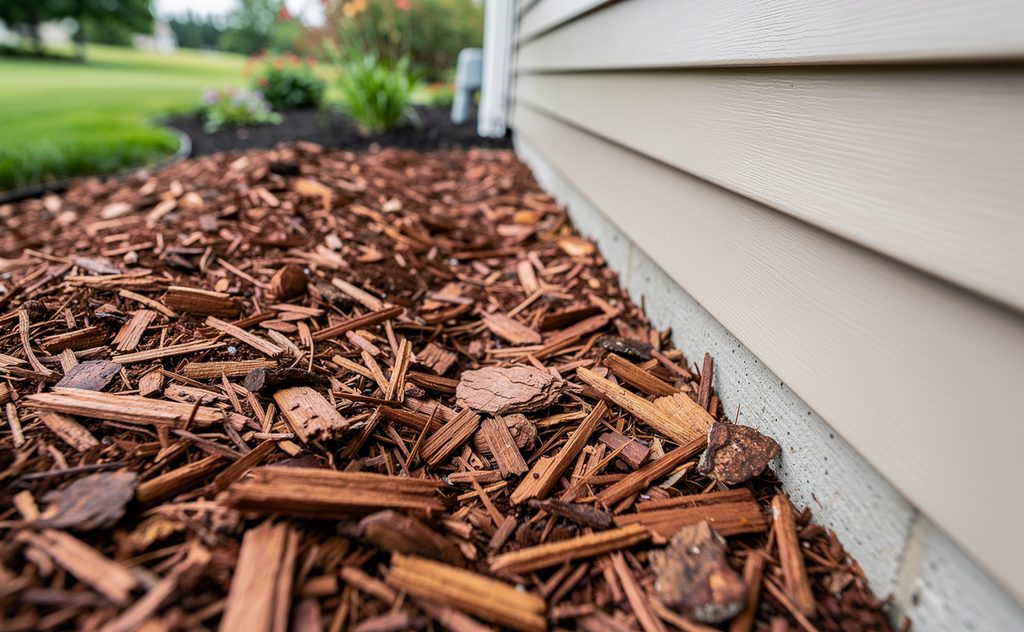
Mulch is generally good for soil health, but it’s easy to overdo it in ways that work against a foundation. Piling mulch up against the base of a house, sometimes called “mulch volcanoing” when it’s done around tree trunks, traps moisture against siding and foundation walls and can also create a hidden pathway for termites and other pests. A two-to-three-inch layer kept a few inches clear of the foundation does the job without the added risk. Raised garden beds built directly against a foundation wall carry a similar problem: the extra soil and more frequent watering they require can saturate the ground right where a house needs it driest.
Patios and walkways also deserve the same grading scrutiny as the rest of the yard. A patio poured flat or sloped toward the house will direct water against the foundation every time it rains, and once concrete or pavers are in place, the fix is far more expensive than it would have been during the original grading work. Anyone planning a new patio or walkway should confirm the slope before the hardscaping goes in, since fixing it afterward means tearing out what’s already built.
Irrigation System Placement
Sprinkler systems are another common, and often invisible, source of foundation stress. A sprinkler head aimed directly at a foundation wall, or a zone that runs longer than the surrounding soil actually needs, can keep one section of ground consistently wetter than the rest of the yard. Over months and years, that inconsistency contributes to the same uneven soil movement that overwatering from any other source would cause. Drip irrigation, which delivers water directly to plant roots rather than broadcasting it across a wider area, is generally a safer choice for beds located close to the house. Homeowners looking at broader water waste in their irrigation setup will often find that better zoning and drip lines near structures solve both the water bill and the foundation risk at once. And smarter timers close the gap even further.
Seasonal adjustment matters just as much as system design. A watering schedule set for peak summer heat is likely to be excessive in spring and fall, and that excess water has to go somewhere. Checking and adjusting irrigation timers each season, rather than leaving them on a single year-round setting, keeps soil moisture closer to the level a foundation was actually designed to sit in.
Warning Signs You’ve Already Got a Problem
Some foundation issues show up gradually enough that homeowners don’t notice until they add up. Doors and windows that stick without an obvious cause are worth paying attention to, along with small diagonal cracks near corners of the house. A floor that seems slightly uneven when a marble or ball is set down on it is another signal not to ignore. None of these signs on their own means a major structural problem, but together, or if they’re worsening over a season or two, they’re a signal that the soil around the foundation isn’t behaving the way it should. Simple landscaping fixes like extending a downspout or correcting a mulch bed can sometimes resolve a minor issue. But when cracks are wider than a quarter inch, doors won’t close at all, or the problem keeps returning after DIY fixes, it’s worth having a professional evaluate the foundation directly rather than continuing to guess.
Conclusion
A well-planned yard delivers curb appeal and foundation protection at the same time. Grading, plant selection, mulch depth, and irrigation timing all influence how much moisture ends up sitting against a foundation, and small adjustments to any of them add up over time.
Homeowners who think through drainage and soil moisture at the same time they’re picking out trees and flower beds end up with landscaping that holds up in both directions: a yard that stays beautiful, and a foundation that stays where it’s supposed to be.
