
The choice between a new-build and a resale apartment in Tbilisi is not simply about price. It involves delivery timelines, location trade-offs, renovation costs, and how you plan to use the property. Both segments have genuine advantages, and the right answer depends on what the buyer is actually trying to achieve.
The market for real estate in Tbilisi is large enough that both categories offer meaningful options across most budgets. What differs is the risk profile, the hidden costs, and the timeline before the property is usable or generating income.
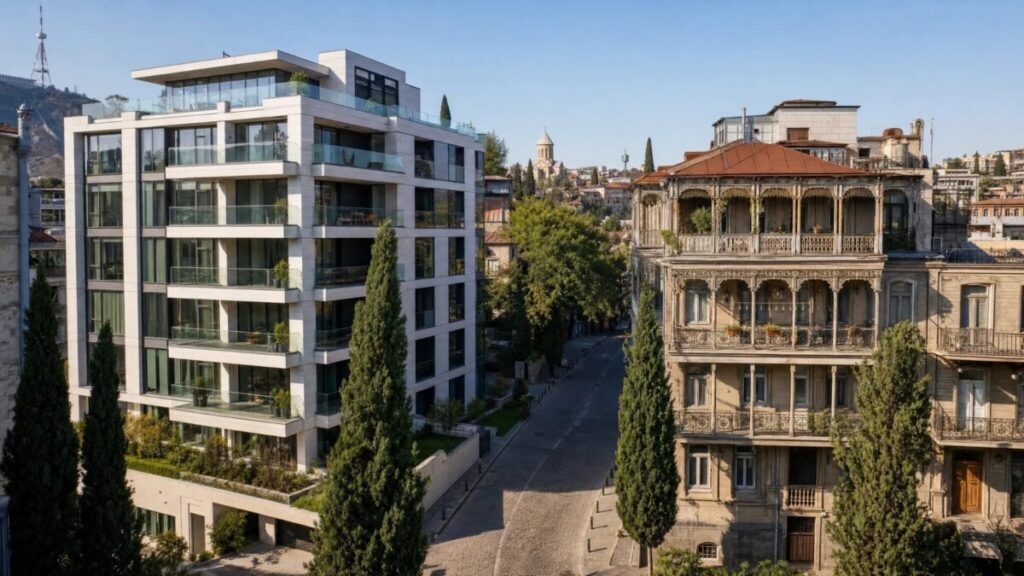
- Price Comparison: New-Build vs Secondary Apartments in Tbilisi by District
- What You Actually Get for the Money: Condition, Size, and Layout Differences
- Hidden Costs of Secondary Apartments in Tbilisi That Buyers Often Miss
- Rental Yield Differences Between New and Secondary Stock in Tbilisi
- Which Option Suits Which Buyer: A Practical Framework for Deciding
- Conclusion
- Similar posts:
Price Comparison: New-Build vs Secondary Apartments in Tbilisi by District
Price is the starting point for most comparisons, but the raw per-square-meter figure is rarely the whole picture. The gap between new and secondary stock looks different depending on which district you are looking at.
In central areas like Vake and Vera, secondary apartments often trade at prices that are close to or even above comparable new builds. The reason is location scarcity. There is limited land available for new construction in these districts, so resale stock in established buildings commands a premium tied to the address rather than the building quality. New builds in the same postcodes, where they exist, are typically priced at $1,500-$2,500 per square meter depending on specification.
In districts with active new construction, such as Saburtalo, Didi Dighomi, and the Axis corridor, the pricing dynamic shifts. New builds and secondary stock compete more directly, and buyers can often find resale apartments at $800-$1,200 per square meter against new-build asking prices of $1,000-$1,600 for comparable sizes. The secondary unit is cheaper on paper but may require $150-$400 per square meter in renovation to reach a livable or rentable standard.
What You Actually Get for the Money: Condition, Size, and Layout Differences
Beyond price per square meter, the physical characteristics of new and secondary stock in Tbilisi differ in ways that affect day-to-day use and rental appeal.
Secondary apartments in Tbilisi, particularly those built during the Soviet period or in the 1990s, tend to offer larger floor areas for the price. A resale two-bedroom in Saburtalo might offer 75-85 square meters where a new-build two-bedroom in the same area delivers 55-65 square meters. For buyers prioritizing space over finishes, older stock often wins on raw area.
New builds, however, offer layouts designed around contemporary use patterns. Open-plan living areas, larger windows, better natural light, and functional storage are standard in mid-range and above new developments. Soviet-era layouts often feature narrow corridors, separated kitchen spaces, and lower ceilings that feel dated regardless of renovation quality.
Finishing is the other variable. New builds sold with a white-box finish require fit-out investment, but the buyer controls the result. Secondary apartments sold with existing interiors may look acceptable but often hide issues behind the surface: aging plumbing, outdated electrical systems, and insulation that does not meet current standards.
Hidden Costs of Secondary Apartments in Tbilisi That Buyers Often Miss
The headline price of a resale apartment rarely reflects the total cost of ownership. Several categories of expense are easy to underestimate when comparing against a new-build price.
- Renovation scope and cost. Cosmetic renovation in an older Tbilisi apartment can cost $10,000-$20,000 for a standard two-bedroom. Full renovation including plumbing, electrical, and structural work can reach $30,000-$50,000 on larger units. This can close or eliminate the price gap with a comparable new build.
- Building infrastructure age. In older multi-apartment buildings, the elevator, water supply, heating systems, and roof may be due for significant repair or replacement. Buyers rarely assess building-level costs, but they become relevant quickly when systems fail after purchase.
- Title history complexity. Secondary properties in Tbilisi can have layered ownership histories, unresolved inheritance situations, or informal agreements that are not captured in the registry. Legal due diligence is not optional, and problems in the title chain can be expensive and slow to resolve.
- Energy efficiency costs. Older buildings in Tbilisi were not built with insulation standards that match current practice. Higher heating costs in winter and cooling costs in summer are a running expense that buyers rarely model into their purchase decision.
Rental Yield Differences Between New and Secondary Stock in Tbilisi
For investors focused on rental income, the choice between new and secondary apartments has direct implications for yield, tenant quality, and vacancy rate.
New-build apartments in Tbilisi attract a specific tenant profile: expats, digital nomads, and higher-income local professionals who prioritize building quality, amenities, and reliable management. These tenants tend to stay longer and cause fewer maintenance issues. Mid-term rental rates for well-finished new apartments in Saburtalo or central districts run $600-$1,200 per month for one and two-bedroom units.
Secondary apartments with good renovation can compete for the same tenant pool, but the competition is harder in buildings with aging common areas or unreliable infrastructure. Renovated resale units in good locations often achieve comparable rental rates to new builds, but the renovation investment must be factored into the yield calculation. An apartment that cost $80,000 to buy and $25,000 to renovate needs to be assessed against a $105,000 base, not an $80,000 one.
Which Option Suits Which Buyer: A Practical Framework for Deciding
There is no universal answer to whether new or secondary stock is the better purchase in Tbilisi. The right choice depends on a set of buyer-specific factors.
- Buyers seeking immediate occupancy or income. A fully renovated secondary apartment is ready to use or rent from day one. A new build purchased off-plan requires an 18-36 month wait before delivery, and a white-box finish requires additional fit-out time after that.
- Buyers prioritizing location over building quality. In established central districts, secondary stock gives access to addresses where new construction is rare. If a Vake or Old Town address matters more than a new building, resale is often the only realistic route.
- Investors with a long hold horizon and limited renovation capacity. A new build in a developing corridor removes renovation risk and offers predictable management costs for the first several years. This suits buyers who want a clean, hands-off asset rather than a project.
- Budget-conscious buyers comfortable with renovation work. Secondary apartments in good locations with full renovation budgets factored in can still deliver better value per usable square meter than equivalent new builds. This works best when the buyer can manage the renovation process directly or has reliable local contacts to do so.
Conclusion
New and secondary apartments in Tbilisi each make sense under different conditions. New builds offer predictable quality, contemporary layouts, and lower maintenance in the early years, but they come with longer timelines and smaller floor areas for the price. Secondary stock offers location access, larger spaces, and immediate availability, but requires honest accounting of renovation costs and building-level risks. The better deal is not a category answer. It is the result of matching the property type to the buyer’s actual priorities, timeline, and budget for the total cost of ownership.
