
Most gardeners care for their plants but not for the tools that make good gardening possible. A good pair of pruners will last for 15 years or more, but only if they are stored properly between uses. If you don’t want to watch your tools rust and break long before their time, here are the common mistakes to avoid and what to do instead.
Leaving Tools Exposed to the Elements
Garden tools are more damaged by humidity and direct sun than by actual use. Moisture will cause surface rust on the metal blades within days, and once rust is present, it will spread. A shovel leaning against the side of the house during a rainy week will develop pitting along the edge of the blade that can’t be completely sanded away.
Wooden handles are not spared either, but it takes longer to manifest. The wood fibers dry out with exposure to UV, resulting in cracks and splinters. Anytime a handle splits, it’s not just a practical problem – it’s a safety problem. The solution is straightforward: take tools indoors or under a covered structure after use. Even the most convenient things to leave out overnight, such as a garden shed, a garage corner, or even a covered porch, are better.
Storing Tools Dirty
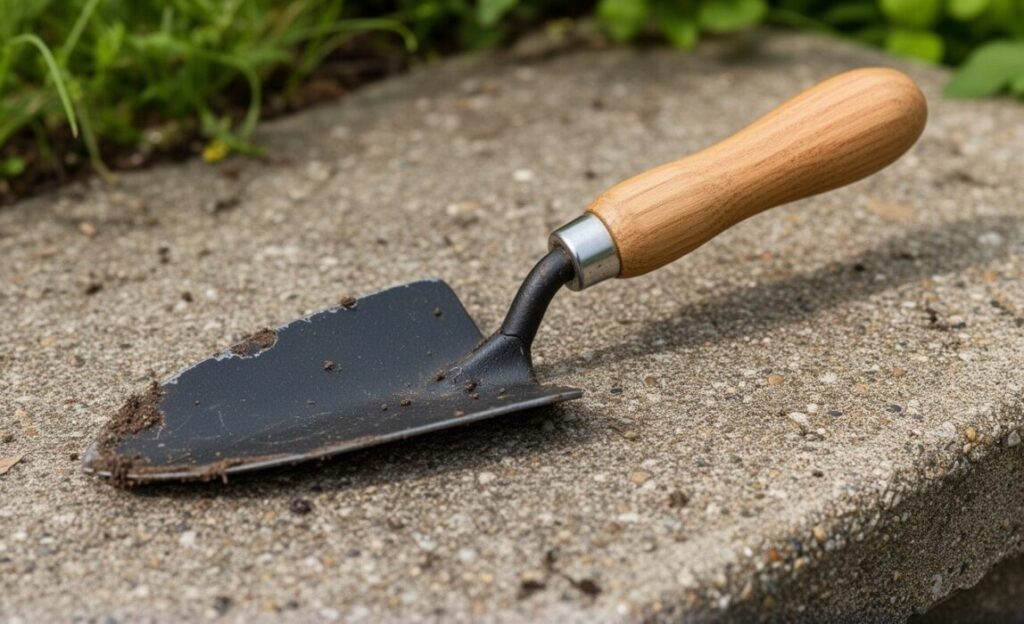
Blades and tines are coated with soil after almost every use, and many gardeners simply discard the tool after use. The remaining dirt retains moisture on the metal, accelerating corrosion even during dry storage. Plant pathogens and fungal spores can also be spread from one area of the garden to another when the tool is used again while caked with soil.
Cleaning requires 2 minutes. Clean blades with a stiff brush or rag, rinse if necessary, and dry thoroughly before storing tools. A quick wipe with rubbing alcohol or a diluted bleach solution prevents the spread of pathogens to healthy beds with tools used around diseased plants. This is one of the quickest ways to shorten a tool’s working life and is virtually free to avoid.
Hanging Tools Incorrectly (or Not at All)
It might appear safe to stack rakes, hoes, and shovels in a corner, but it’s not. Tools stacked on top of one another will dull each other’s edges, and wooden handles will be subject to pressure from stacked tools and may warp over time. Then there’s the real risk: a tines-up rake is a surefire way to end up with a face-to-face.
Most of these difficulties can be addressed simultaneously with wall-mounted racks. Blades are not hanging on the ground, away from moisture and from other blades, by hanging them by the head. It also simplifies access to tools, and that’s more significant than people realize. The pegboard with outlined tool shapes is a standard feature in professional workshops, perfectly suited for a garden shed, and can be set up in an afternoon. Vertical storage preserves edges, saves floor space, and quickens the search for whatever you need during the project.
Losing Track of Small Parts and Accessories
While large tools are in focus, small tools are equally frustrating when storage is not taken into account. Sprinkler heads, drip irrigation fittings, spare mower blades, plant tags, twine, and seed packets are likely to be left in a junk drawer or on a shelf. Then it becomes a 20-minute hunt for the correct fitting, and small parts are lost or damaged in the process.
A steel drawer storage cabinet is the solution to this, just as a pegboard is for tool storage: everything has a place, and you can easily see what you have and what’s running low. For sorting by category, clear plastic bins or small hardware drawers are appropriate; for irrigation parts, fasteners, and seed packets by planting season, they can be sorted into different sections. Make sure each drawer has a label so anyone using the shed can find what they need without digging. If you purchase replacement parts in bulk to save money as a gardener, a parts cabinet will also make it easy to see when it is time to reorder, since empty compartments will be noticeable.
Ignoring Handle Maintenance
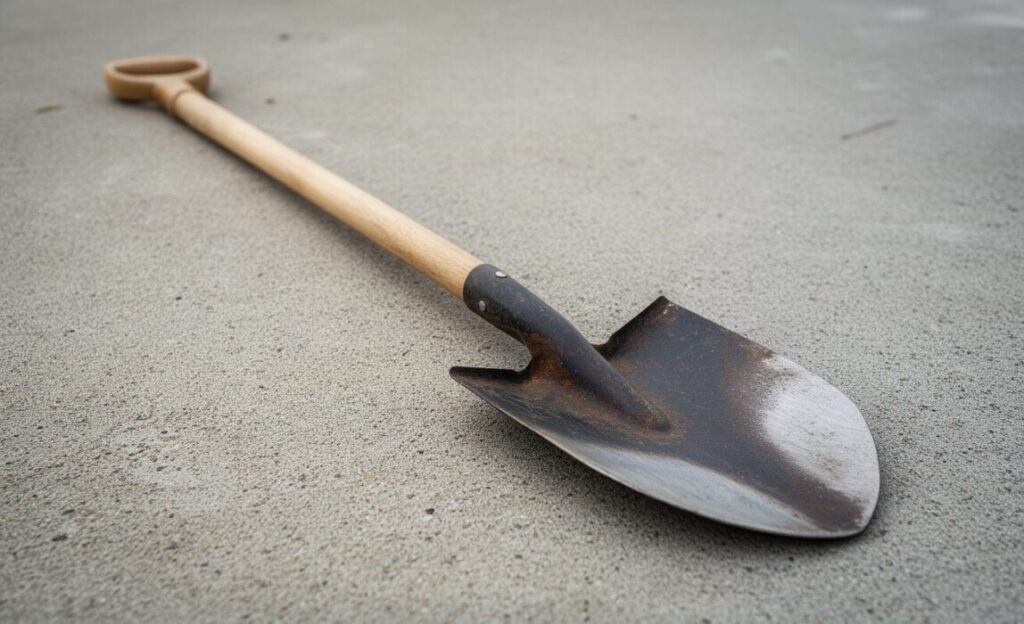
Most gardeners do not bother with oiling wooden handles, but it should be done periodically. If it is not, wood dries, becomes brittle, and cracks with normal use. A handle that snaps in the middle of an operation is not only a nuisance, but can also be harmful if force is applied at the time of the snap.
Once or twice a season, linseed oil will keep wood supple and less susceptible to moisture damage. Rub a thin layer on the handle, let it absorb for a few hours, then wipe it off. Fiberglass and metal handles do not have this problem, but require other maintenance such as checking for loose fittings where the handle attaches to the tool head. The 5-minute check before putting tools away for winter catches problems before they are too late and too expensive to fix.
Mixing Sharp and Blunt Tools Without Separation
The edges of pruners, loppers, and hand saws must be protected, and so must the person who will reach into the storage bin next. These items can be thrown into a bucket with trowels and gloves, which dull the blades against harder metal and pose a serious risk of cuts when reaching for the wrong item.
This is easily solved with sheaths, blade guards, or a special cutting-tool drawer. Many gardeners already have the original packaging or a basic leather sheath that accompanies pruners, and using them requires no additional effort. If a tool doesn’t have a guard, a piece of old garden hose cut lengthwise and put over the blade is a cheap and effective alternative. Sharp tools are also easier to sharpen when they are kept separate, as all the tools requiring an edge are in one place.
Overlooking Climate Control in Storage Areas
The stress that a shed puts on tools that most people don’t think about is why they need to be replaced. Wood expands and contracts with extreme temperatures, which over time can loosen handle fittings. Condensation is particularly likely to occur on cold surfaces in unheated, humid sheds where metal tools are stored, which can lead to rust even if the tools were clean and dry when stored.
Insulating a shed can be a simple task. A simple wooden pallet to keep tools off the concrete floor, a small dehumidifier in the summer, and weatherstripping around the door all help minimize moisture exposure. If you live in a cold climate, you can store smaller hand tools in a basement or closet during the winter months for an additional measure of protection with minimal effort.
Final Thoughts
There are no complicated rules for good tool storage, just consistency. A few minutes of cleaning, the proper hanging system, and periodic handle maintenance can extend the life of a tool by years and save real dollars over time. Just as you would care for your plants, your tools will continue to work year after year.
