
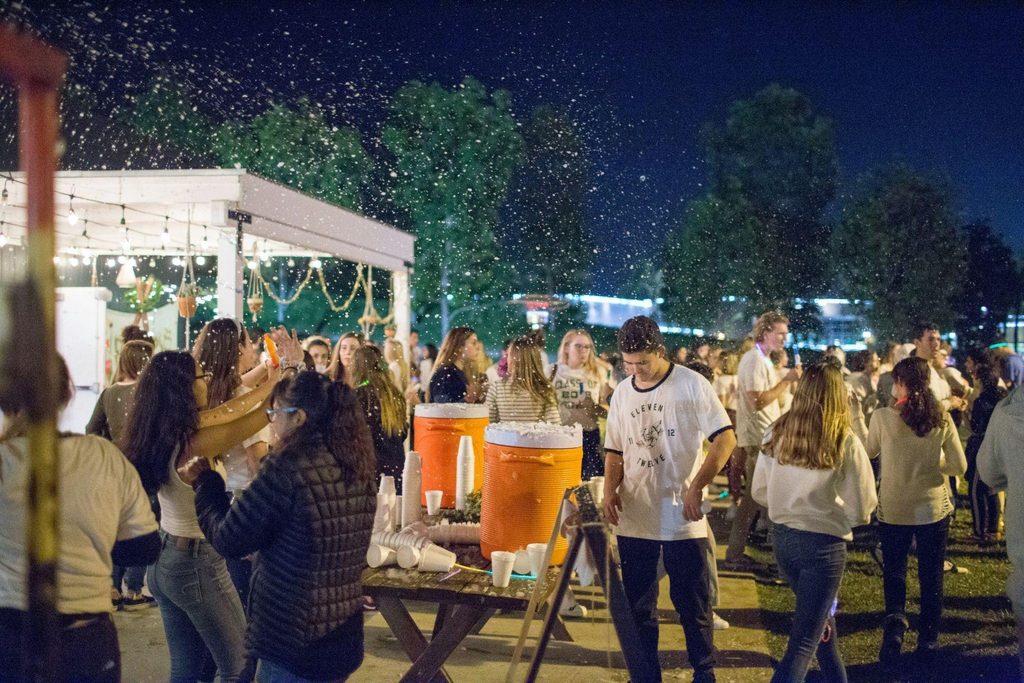
Hosting outdoors can feel wonderfully informal. People move between the patio and lawn, food does not need an elaborate presentation, and the setting itself provides much of the atmosphere.
That relaxed feeling, however, is much easier to achieve when the practical details have already been handled. An awkward seating arrangement, a dark pathway, nowhere to put a drink, or a neglected entrance becomes much more noticeable once the yard fills with people.
Before guests arrive, concentrate on the outdoor details that affect comfort, movement, and atmosphere rather than trying to make every corner perfect.
Give the Front of the House a Quick Check
Guests begin forming an impression before they reach the backyard, so start with the approach to the house.
Clear the walkway, sweep the porch, remove packages or gardening equipment, and check whether the entrance looks welcoming. Small exterior features can make a surprisingly large difference because they are seen before anything else.
If a flagpole is part of the front-yard plan, proportion matters just as much as placement. Understanding what size flagpole for a house can help homeowners choose something that complements the property rather than visually overwhelming the house or disappearing within a larger landscape.
Once the entrance looks intentional, there is usually no need to keep adding decoration. A tidy approach creates a better first impression than an overloaded one.
Arrange Seating Around Conversation
Outdoor furniture often sits where it is convenient during everyday life rather than where it works best for a gathering.
Before guests arrive, reconsider the arrangement.
Instead of lining chairs along a wall or concentrating every seat around one large table, create smaller conversation areas. Chairs positioned so people can comfortably see one another make it easier for groups to form naturally.
Do not worry if every chair does not match. Outdoor gatherings can handle a mixture of dining chairs, benches, lounge furniture, and additional movable seating.
Remember to provide surfaces for drinks and plates too. A beautiful lounge area becomes less comfortable when everyone has to balance a glass on the arm of a chair.
The aim is not to seat every guest simultaneously in a formal arrangement. It is to give people obvious, comfortable places to settle throughout the event.
Plan One Moment Guests Will Remember
A relaxed gathering does not need a complicated entertainment schedule, but one memorable feature can give the evening a sense of occasion.
That might be an outdoor movie, music after dinner, a fire pit, a special dessert, or something more visually striking for a larger celebration. For an event where a bright outdoor display suits the atmosphere, colorful fountain fireworks can create a lively focal point and give everyone a reason to gather together for a shared moment.
Think about when that feature works best within the evening rather than treating it as an afterthought. A planned highlight feels much more natural when guests already know where to gather and the rest of the outdoor space has been arranged around easy movement.
One strong moment is often more memorable than trying to fill the entire evening with organized activities.
Test the Yard After the Sun Goes Down

A backyard that works perfectly at four in the afternoon can become surprisingly difficult to navigate several hours later.
Do an evening walkthrough before the gathering.
Pay particular attention to steps, pathways, gates, changes in ground level, food areas, and the route guests will take back into the house. These areas need enough illumination to be practical.
Then think about the atmosphere.
One powerful exterior light may make everything visible, but it can also make a relaxed seating area feel harsh. Several softer sources of light can create a more inviting setting while still helping people move comfortably around the space.
String lights, lanterns, table lighting, and subtle pathway lights can each serve a different purpose. Test them in advance rather than discovering after sunset that one important part of the yard remains completely dark.
Prepare for Heat, Wind, and Cooler Evenings
Outdoor hosting means accepting that you cannot completely control the environment.
What you can do is make it easy for guests to adapt.
On a hot afternoon, make sure the main seating area has some shade. Umbrellas, trees, covered patios, and pergolas can all provide relief without forcing everyone indoors.
Wind creates different problems. Lightweight napkins, table decorations, and disposable plates can quickly become irritating if they constantly blow around the yard. Secure anything particularly light before guests arrive.
Even warm days can lead to cooler evenings. If people are likely to stay outside after dark, having a few throws accessible can make the space more comfortable without interrupting the gathering.
Checking the forecast helps, but preparing for a little variation is even better.
Keep Food and Drinks From Creating a Traffic Jam
Watch what happens when the first few guests arrive at an outdoor gathering: people naturally gravitate toward food and drinks.
If both are positioned directly beside a doorway, grill, or narrow section of patio, that area can become crowded almost immediately.
Give serving stations some breathing room.
A self-serve drink area can reduce the number of people moving in and out of the kitchen. Keep ice, glasses, water, and other drinks together so guests do not need to ask where everything is.
Food should be similarly easy to reach without interfering with whoever is cooking.
It also helps to decide beforehand where used plates, bottles, cans, and other rubbish will go. A discreet but accessible place for cleanup prevents tables from gradually filling with empty glasses and plates as the evening continues.
Do One Final Walkthrough as a Guest
Once everything is ready, stop looking at the yard as the person who lives there.
Walk through it as though you have just arrived for the first time.
Is the route to the gathering area obvious? Is there somewhere to sit? Can you put down a drink? Is the path to the house clear? Are gardening tools, hoses, children’s toys, or other everyday items sitting in the middle of the space?
You will probably notice several small things that became invisible through familiarity.
Fix those, then stop.
Outdoor entertaining does not require a flawless lawn, brand-new furniture, or elaborate decorations. Guests are much more likely to appreciate comfortable seating, easy movement, good lighting, and an atmosphere that encourages them to stay.
