
Insulating an entire building can seem like the obvious route to better comfort and lower energy costs. In many cases, it is the right long-term decision. But “insulate everything” is not a universal rule – particularly for metal buildings, workshops, agricultural structures, warehouses, and other spaces that are not conditioned like homes.
Sometimes the roof is responsible for the most pressing problem. In other situations, heat is escaping through walls, air leaks are undermining performance, or moisture is entering from below. The right approach depends less on convention and more on how the building is constructed, occupied, and used.
Before committing to a full-building installation, it helps to ask a more practical question: where is insulation likely to deliver meaningful value?
Start With the Building’s Purpose
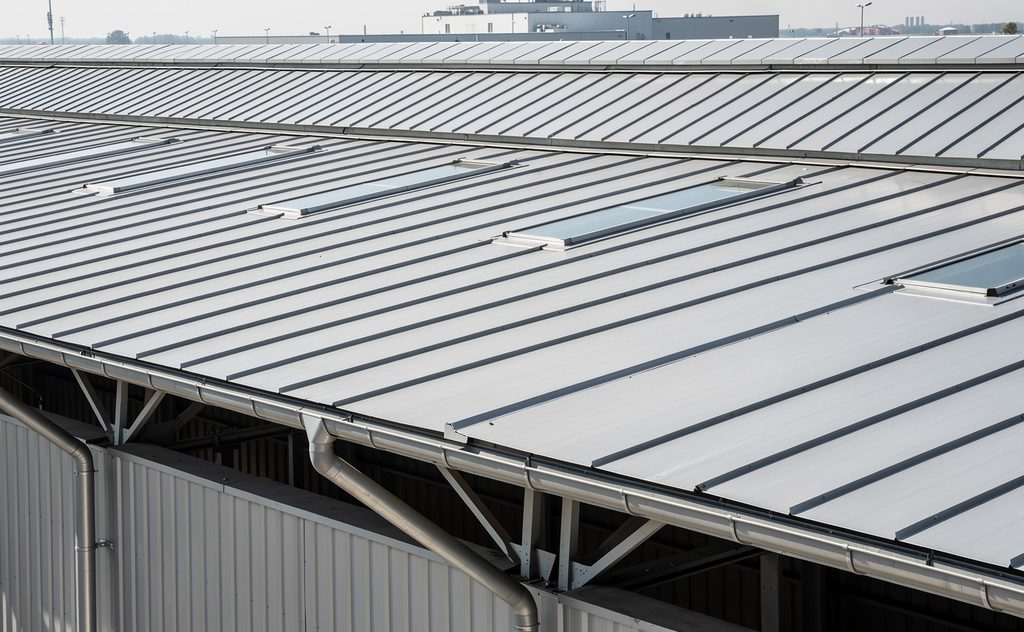
An insulation strategy should reflect what happens inside the structure. A metal storage building used occasionally has different requirements from a workshop occupied every weekday. Likewise, a livestock building needs careful ventilation and moisture management, while a climate-controlled warehouse may require a continuous thermal envelope.
Conditioned Versus Unconditioned Space
If the building is heated or cooled regularly, insulating both the roof and walls usually makes sense. A complete thermal boundary slows heat transfer across the entire enclosure, helping HVAC equipment maintain stable indoor conditions.
In an unconditioned or intermittently used building, the calculation changes. The goal may not be to hold a precise temperature. Instead, the owner might want to reduce intense summer heat, limit condensation beneath roof panels, or make short periods of winter use more comfortable. Addressing the roof alone may provide a worthwhile improvement without the cost and disruption of insulating every surface.
Future use matters too. A bare storage building may eventually become a workshop, office, or retail space. If that conversion is likely, planning for wall insulation during construction can be less expensive than retrofitting it later.
Why the Roof Often Comes First
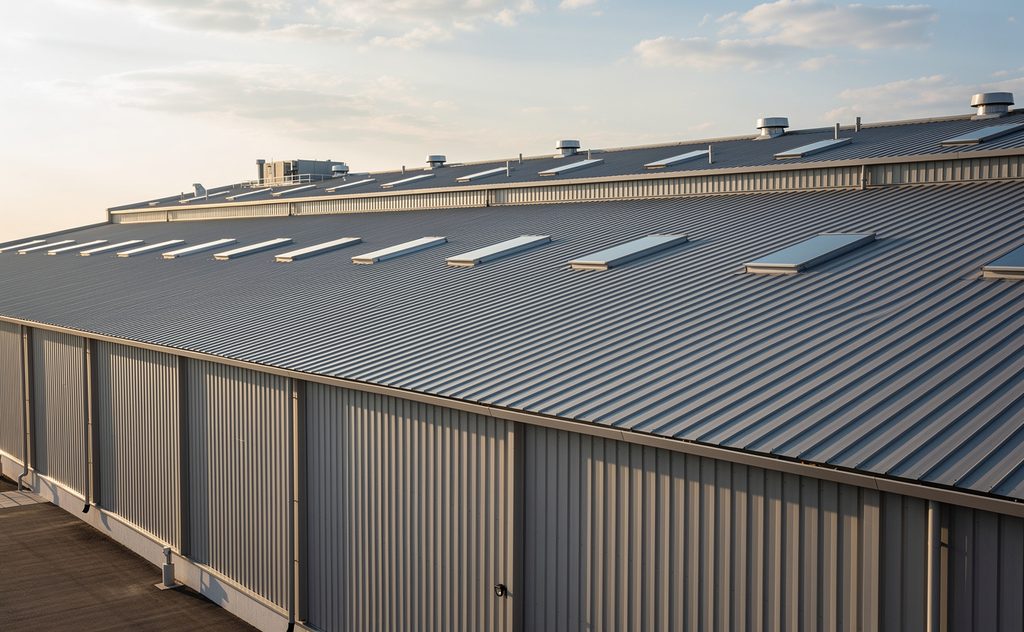
Roofs experience heavy solar exposure. On a clear summer day, metal roofing can become much hotter than the outdoor air, and that heat can radiate into the space below. In a low-rise building with a broad roof area, the effect can dominate indoor conditions.
During colder weather, warm, moisture-laden indoor air may rise and meet a cold roof surface. If that surface temperature falls below the air’s dew point, condensation can develop. Dripping, corrosion, wet stored materials, and damp insulation are possible consequences.
When Roof-Only Insulation Is Reasonable
Roof-only insulation is often considered for open-sided structures, equipment buildings, detached garages, seasonal workshops, and agricultural spaces where wall insulation would provide limited benefit. It can also be a sensible first phase when budget or access makes a full retrofit impractical.
However, product type and installation details matter. Reflective systems, fibrous insulation, rigid boards, and spray-applied materials control heat flow and moisture in different ways. Building owners looking at metal-roof applications should first understand roof-only insulation for metal buildings, including how roof geometry, air spaces, seams, and attachment methods influence performance.
The key is to define the problem accurately. If solar heat gain through the roof is the primary concern, a roof-focused assembly may work well. If the building struggles to retain heat in winter, leaving large wall areas uninsulated will continue to create substantial heat loss.
Where Partial Insulation Falls Short
Insulation does not perform as a collection of unrelated patches. Gaps, compressed areas, exposed framing, and unsealed transitions can become thermal bridges – paths that allow heat to bypass the insulating layer.
Walls, Floors, and Air Leakage Still Count
A heated building with an insulated roof but bare metal walls may feel warmer near the center yet remain uncomfortable around the perimeter. Cold wall surfaces can also contribute to condensation when indoor humidity is high.
Air leakage is another common blind spot. Gaps around doors, ridge details, eaves, wall penetrations, and panel joints may allow conditioned air to escape faster than insulation can save it. In some buildings, sealing obvious leaks produces a more noticeable improvement than adding insulation alone.
Floors and foundations deserve attention as well. An uninsulated slab can be a source of discomfort in cold climates, while ground moisture can raise indoor humidity and increase condensation risk. Insulating the roof will not correct drainage problems, missing vapor control beneath a slab, or persistently wet soil around the foundation.
Make the Decision Based on Evidence
A site assessment does not need to be complicated. Begin by documenting when discomfort or condensation occurs. Is the building unbearable only on sunny afternoons? Does moisture appear after cold nights? Are heating costs high even though the roof is already insulated?
A useful assessment should consider:
- Local summer temperatures, winter lows, humidity, and daily temperature swings
- How often the building is occupied, heated, or cooled
- Roof and wall area, orientation, color, and existing insulation
- Air leaks, ventilation, indoor moisture sources, and signs of corrosion
- Future plans for finishing or conditioning the space
- Local energy, fire, and building-code requirements
Infrared imaging can reveal missing insulation and thermal bridges, while humidity and surface-temperature measurements can help identify condensation risk. For larger or continuously occupied buildings, an energy auditor or building-envelope specialist may prevent costly assumptions.
Think in Systems, Not Surfaces
The best insulation plan is rarely based on square footage alone. It considers heat flow, moisture, ventilation, air sealing, occupancy, and budget as parts of the same system.
Roof-only insulation can be an effective, economical response when the roof is the dominant source of heat gain or condensation. It is less likely to succeed when the aim is whole-building temperature control. In that case, a continuous envelope – including walls, openings, and sometimes the floor – is usually the stronger investment.
The goal is not to insulate as much as possible. It is to insulate deliberately, solving today’s problem without creating tomorrow’s.
