
Renovations rarely feel as tidy in real life as they look in the “before and after” photos. Somewhere between the first sledgehammer swing and the final coat of paint, most homeowners hit a stretch where the house feels less like a construction zone and more like a landfill with a roof. Dust settles into vents and tools pile up in the hallway, and every surface seems to collect a fine layer of drywall grit before long. Even a project that started with a clear strategy and a realistic budget can feel like it’s spiraling once the mess sets in.
Renovation chaos is normal, but surviving it with your sanity intact requires planning for the mess before demolition even begins. Success depends on where the debris goes, who coordinates the work, and how your household functions during the disruption. This is why an actionable guide and the help of a reliable renovation company are essential: they keep the project on track while minimizing disturbances to your daily life.
Before Demo Day: Setting Up for a Manageable Mess
The single biggest mistake homeowners make is waiting until debris has already piled up to figure out where it goes. By the time drywall scraps and old cabinetry are stacked in the garage alongside torn-out flooring, the project already feels out of control. Lining up a front-load dumpster rental before demolition starts gives every trade a clear place to dump material as they go, so it never has the chance to pile up in rooms you still need to walk through. It also keeps the driveway and yard usable, which matters more than most people expect once a project stretches past a week or two. Ordering the container a few days ahead of the scheduled start date avoids the common scramble that happens when a crew shows up ready to demo and finds nowhere to put what they tear out.
When using a dumpster rental, positioning matters almost as much as ordering the right size. Placing the container close enough for workers to reach without tracking debris through finished areas, but far enough that it doesn’t block a driveway or damage a lawn, takes a few minutes of planning most homeowners skip. It also helps to think beyond the immediate demo phase. A home that connects well to its home remodel and outdoor space needs protected pathways and staging areas mapped out before crews start hauling materials in and out, so landscaping and hardscaping don’t become collateral damage. Laying down plywood along the route from the work area to the dumpster is a small step that can save a lawn or a driveway from months of scraping and staining.
Choosing Who Runs the Project

Bad materials don’t ruin a renovation; bad management does. Projects fall apart when no one is watching the schedule or catching those hidden, behind-the-wall surprises before they completely derail your timeline. Homeowners who try to act as their own general contractor often underestimate how much coordination that role demands. Trades need scheduling so they don’t collide, and someone has to stay on top of permit inspections too. Catching a problem before it becomes expensive takes a level of attention most people haven’t budgeted the time for. By bringing in an established renovation company, the burden shifts away from the homeowner and into the hands of a team that has run the same sequence dozens of times before. Someone stays accountable when a delivery runs late, or a trade doesn’t show, sparing the homeowner from chasing down every missing piece alone.
A good renovation company also keeps the project compliant with regulations most homeowners have never heard of. Older homes in particular can trigger requirements around dust containment and material handling that go beyond basic cleanup. Projects that disturb painted surfaces in homes built before 1978, for example, fall under federal rules requiring lead-safe work practices. A contractor who already understands those obligations builds them into the schedule from the start, long before they would otherwise surface mid-project and stall the work. That kind of foresight is often the difference between a renovation that stays on schedule and one that gets stalled by a compliance issue nobody planned for.
Living in the House During the Work
Staying in a home during a renovation is its own kind of endurance test. Dust migrates far beyond the room being worked on, noise starts earlier than expected, and the normal rhythm of a household gets disrupted for weeks at a time. However, sealing off active work areas with plastic sheeting and setting up a temporary kitchen or living space, even a basic one, can make the difference between a stressful month and an unbearable one. Some of the home upgrades that help most during a renovation are small and practical, and include modifications like a temporary door seal or a coffee maker relocated somewhere dust-free.
Communication with the crew also matters and is just as important as the physical setup. Homeowners who ask for a rough daily or weekly schedule tend to handle the disruption better than those who are simply told, “it’ll take a few weeks.” A household can plan around a water shutoff, an unusable bathroom, or a loud phase like demolition or tile-cutting once it knows the timing in advance, rather than getting caught off guard every morning. It’s also worth asking the crew lead for a five-minute update at the start or end of each day rather than trying to track progress room by room.
Beyond the general noise and disruption of a renovation, pets and young children add hidden complications that are easy to overlook until problems arise. Open dumpsters and exposed nails are hazards a curious toddler can find fast, and a dog left off-leash in the yard can get to them just as easily. That’s why setting clear boundaries around active work zones and making sure every subcontractor knows where those boundaries are is so important; they prevent the kind of accidents that turn a renovation into an emergency room visit. Installing a simple baby gate or temporary fence panel at an active work zone entrance is cheap insurance against a bad afternoon.
Air quality is another factor that’s easy to underestimate. Cutting and sanding kick fine particles into the air, and demolition sends even more of it drifting well past the immediate work zone. That dust can aggravate allergies or asthma in household members who never set foot in the room being renovated. By running an air purifier in adjacent living spaces and taping plastic sheeting over vent openings, particles can be kept from spreading through the heating, ventilation, and air conditioning (HVAC) system into every room in the house.
Budget and Timeline Reality Checks
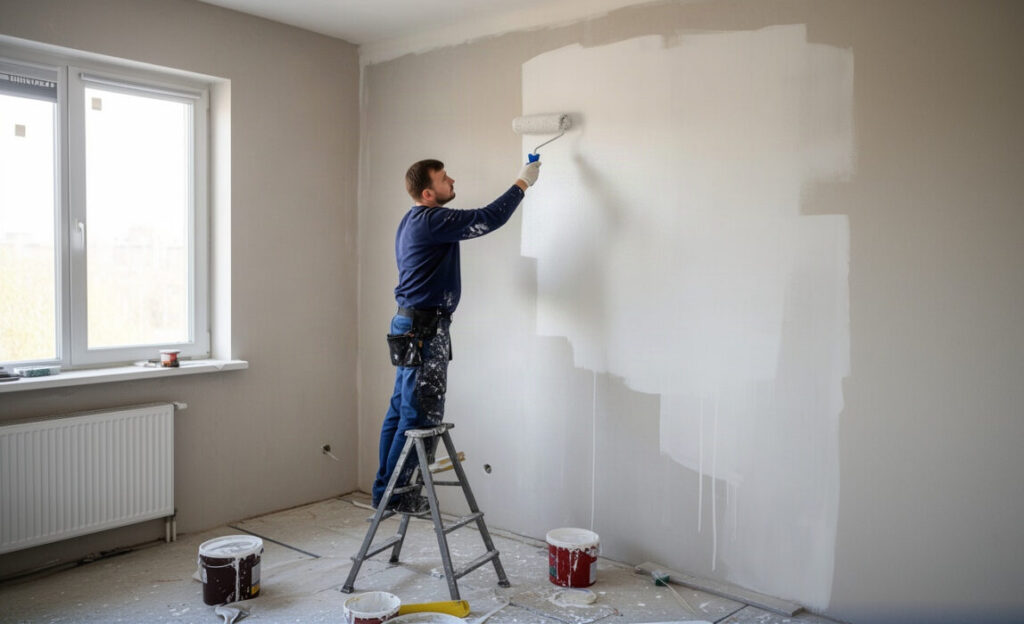
Almost every renovation runs over budget or behind schedule to some degree, and the projects that handle it best are the ones that build in room for it from day one. Opening a wall or pulling up old flooring often reveals problems nobody could see beforehand, whether it be outdated wiring or framing that no longer meets current code. Water damage hiding behind a wall shows up often too, and it tends to be the priciest surprise of the bunch. A contingency fund of at least 10% to 15% of the total budget absorbs these surprises without derailing the entire project or forcing rushed decisions under financial pressure.
Timeline delays also tend to follow predictable patterns. Permitting delays tend to hit at the start, and material backorders show up somewhere in the middle. Finishing touches, almost without fail, take longer than anyone expects near the end. This is why building a buffer of a few extra weeks into the schedule keeps everyone’s expectations realistic, since treating the original estimate as a hard deadline rarely holds up. Homeowners who track progress against a written schedule are usually the first to notice when a delay is starting to compound, more so than those relying on memory or informal updates. Asking for photo updates at key milestones, even informally, creates a record that’s useful if a dispute over timing or quality ever comes up later.
Final Walkthrough and Cleanup
The last stretch of a renovation deserves the same discipline as the first. Before calling the project finished, walk through every room with a punch list in hand, checking outlets, fixtures, paint touch-ups, and hardware installation against what was promised. Small items are easy to miss in a walkthrough that moves too fast, whether they are a scuffed baseboard or a cabinet door that doesn’t sit flush. By going room by room with the original plans or contract in hand, you can catch what a quick pass would otherwise skip.
This is also the point to schedule a final debris haul. Even well-managed projects tend to leave behind leftover materials and packaging that accumulated during the final finishing stages. Closing out the dumpster rental and confirming any required inspections are signed off gives the project a clean, documented ending, so it doesn’t just fade into “mostly done.” Permits and inspection reports belong together in one folder. Warranty information should go there too, since a problem that surfaces months down the line is far easier to solve with the paperwork already in hand.
Renovations always hit a chaotic, messy middle. What saves you from a total disaster is setting up your systems early. You need a clear plan for managing debris and keeping communication on track before the first sledgehammer swings. If you wait until everything is covered in dust, building those habits becomes twice as hard. Getting those pieces right early on is what turns a stressful few months into a renovation homeowners can look back on with satisfaction.
